Recovery for Team Sport Players: Congested Fixtures, Night Games and Travel
 Dr Peter Fowler, PhDSport scientist and co-founder

In this guide
The short answer team sport players recover best by protecting sleep after night games, refuelling straight after matches, and using the first 48 hours for passive recovery like massage, compression and cold water. With four days or fewer between games, recovery stops being optional.
What makes recovery different in team sport?
I've worked in elite team sport at the Australian Institute of Sport, Tottenham Hotspur and Aspetar in Qatar. My research looked at sleep, travel and recovery in professional footballers. The same four problems come up in every code, from football and rugby to netball and basketball:
- Congested fixtures. Two games in a week leave little time to recover.
- Night games. Late finishes wreck sleep.
- Travel. Early flights and long bus trips cut into rest.
- Contact and repeat sprints. Collisions, accelerations and changes of direction leave muscles sore.
Community players face the same issues on a smaller scale. A Saturday game, a Tuesday night training session and a full-time job is its own congested schedule.
How much does a congested fixture list matter?
- Injury. Eleven seasons of data from 27 professional football teams showed that four or fewer days between league matches meant a higher muscle injury rate than six or more days. Hamstring and quadriceps injuries drove the increase (Bengtsson et al., 2013).
- Running output. A meta-analysis found total distance in a match didn't drop during congested periods. Some studies saw less low and moderate intensity running, which may be players pacing themselves to protect their high intensity efforts (Julian et al., 2021).
My reading: players keep turning up and covering the distance. The cost shows up in muscles. That's why the days between games need a plan.
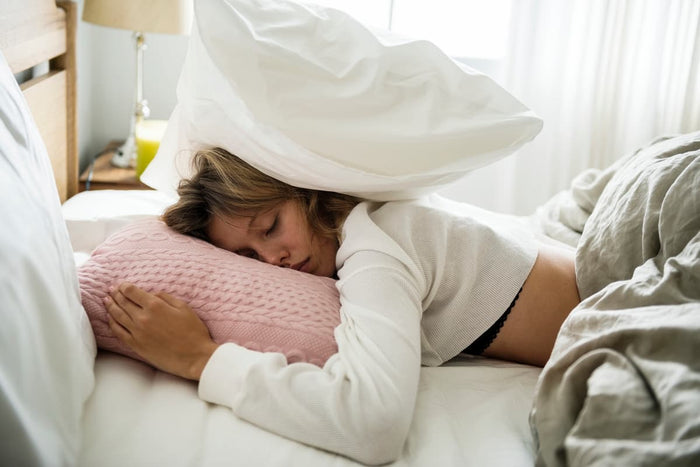
Why is sleep so bad after night games?
- Less sleep. A meta-analysis found elite athletes slept about 80 minutes less after night competition than the night before. After day competition the loss was about 20 minutes (Roberts et al., 2019).
- Still wired. In netball players, adrenaline and noradrenaline were still higher at bedtime after a night game than on a rest day. Sleep was shorter and less efficient, with earlier waking (Juliff et al., 2018).
- Some players struggle more. Players who were more easily aroused in general had worse sleep efficiency after night games (Juliff et al., 2018).
What I'd do after a night game:
- Eat your recovery meal early, ideally at the ground or on the bus.
- Skip caffeine in the second half of the day if you can. Plan your pre-game caffeine early.
- Dim the lights and put screens away once you're home. A boots session on the couch is a good way to wind down.
- Sleep in the next morning. If you can't, take a short nap early in the afternoon.
For a full wind-down plan, print my pre-sleep routine. You'll find more on athlete sleep in Sleep monitoring and elite sport.
How does travel affect team sport players?
Less than most people think, if the schedule is managed well.
- Regular domestic travel. In a season of professional Australian football, away travel had negligible cumulative effects on the drop in player wellness later in the season (Fowler et al., 2015a).
- The schedule is the problem. When a team flew about 10 hours north to Japan, crossing one time zone, players slept only 4.9 hours the night before the early flight and 4.2 hours the night of the match. The time change itself had negligible effects on preparedness (Fowler et al., 2015b).
My reading: avoid very early departures where you can, and protect sleep on either side of travel. Long-haul trips across time zones are different. I cover those in Recovery After Long-Haul Travel.
Which recovery methods work best between games?
- Massage. The most effective method for reducing soreness and perceived fatigue in a large meta-analysis. Compression garments and water immersion also helped both (Dupuy et al., 2018).
- Cold water. After high-intensity exercise, cold water immersion improved muscle power, soreness and perceived recovery 24 hours later compared with resting (Moore et al., 2022).
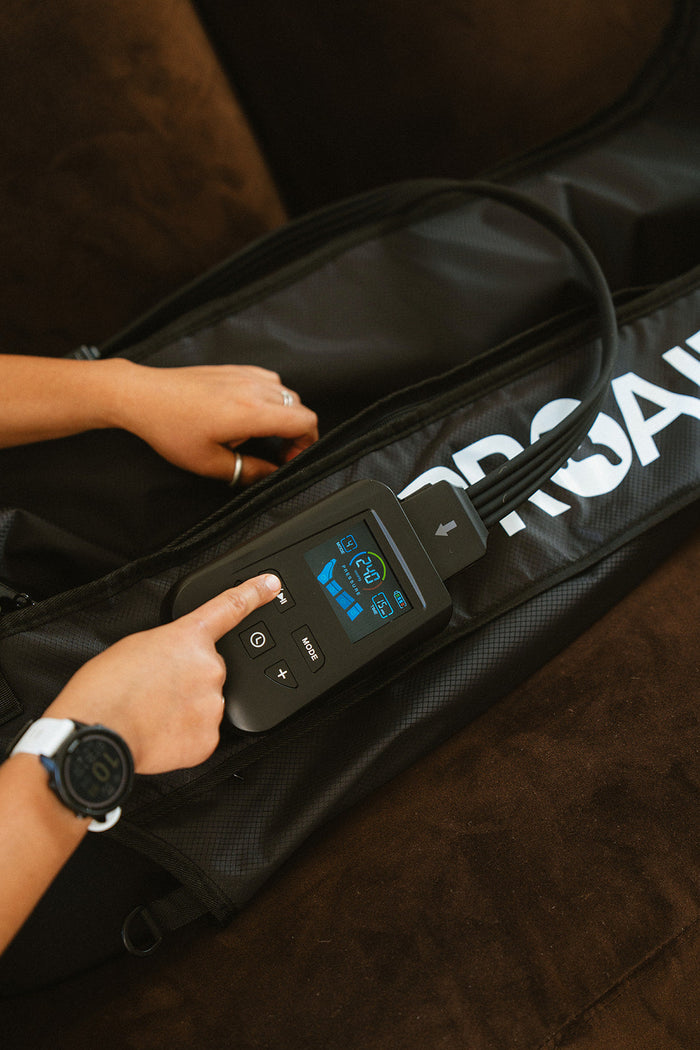
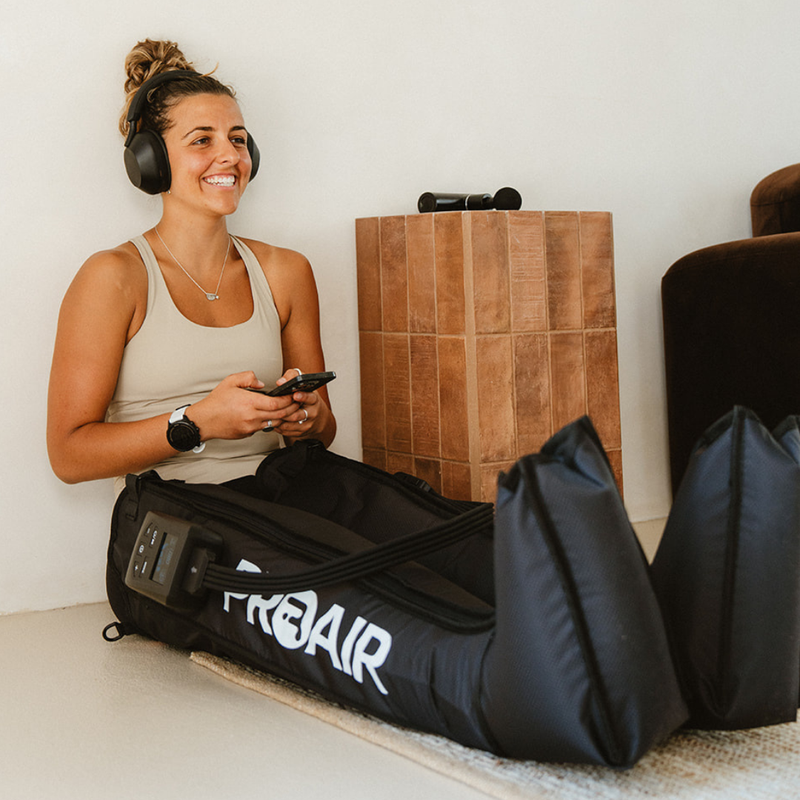
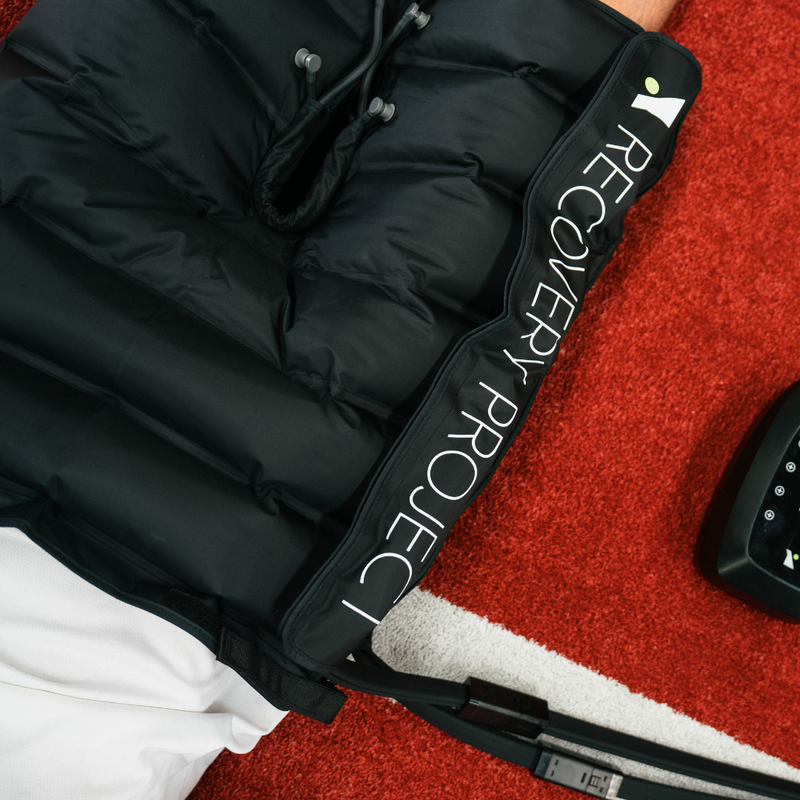
- Compression boots. Boots reduced soreness with a small to moderate effect across 17 studies (Maia et al., 2024). In handball players, daily boot sessions over five weeks of training improved perceived recovery and slightly offset training fatigue (Nuell et al., 2025).
Sleep and food still come first. Boots, cold water and massage sit on top of those foundations. I explain the order in Active vs Passive Recovery.
What does a recovery plan between games look like?
Here's how I'd set up a short turnaround of three or four days. On a normal week, stretch it out and add training back in from day 3.
| When | Focus | What to do |
|---|---|---|
| Straight after the game | Refuel and rehydrate | Carbohydrate, protein and fluid within the first hour. Cold water if it's available |
| Game night | Wind down | 20 to 30 minutes in boots, dim lights, no late caffeine |
| Day 1 | Passive recovery | Sleep in or nap, massage if you have access, boots in the evening |
| Day 2 | Light movement | Pool session, walk or easy spin, mobility, boots again if legs are heavy |
| Day 3 | Short, sharp prep | Brief team session, early night |
| Day before the next game | Top up | Carbohydrate with every meal, your usual boots routine, 7 to 9 hours sleep |
Keep score with the Recovery Points calculator. Aim for at least 60 points a day between games.
Which compression boots suit team sport players?
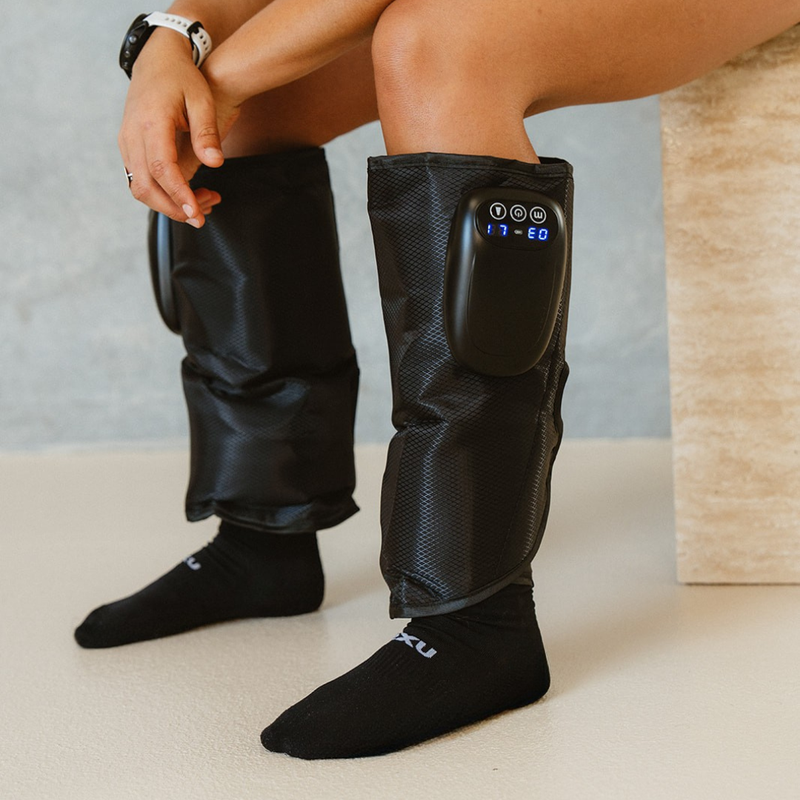
- You travel for away games: PROAir Wireless. Mid level, fully wireless, 30 to 240 mmHg. It packs into your kit bag and runs on the bus or in a hotel room.
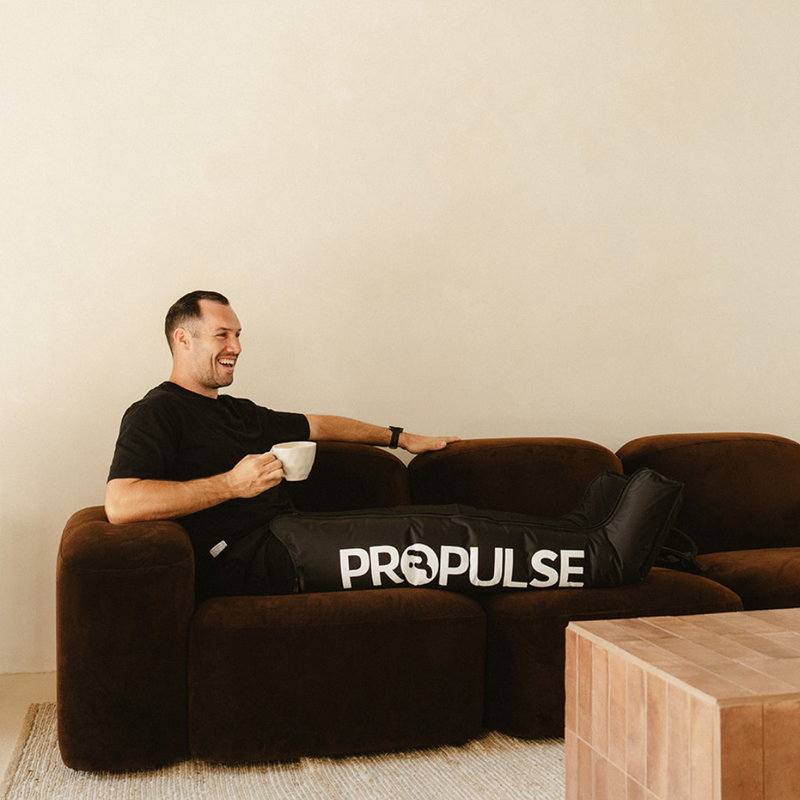
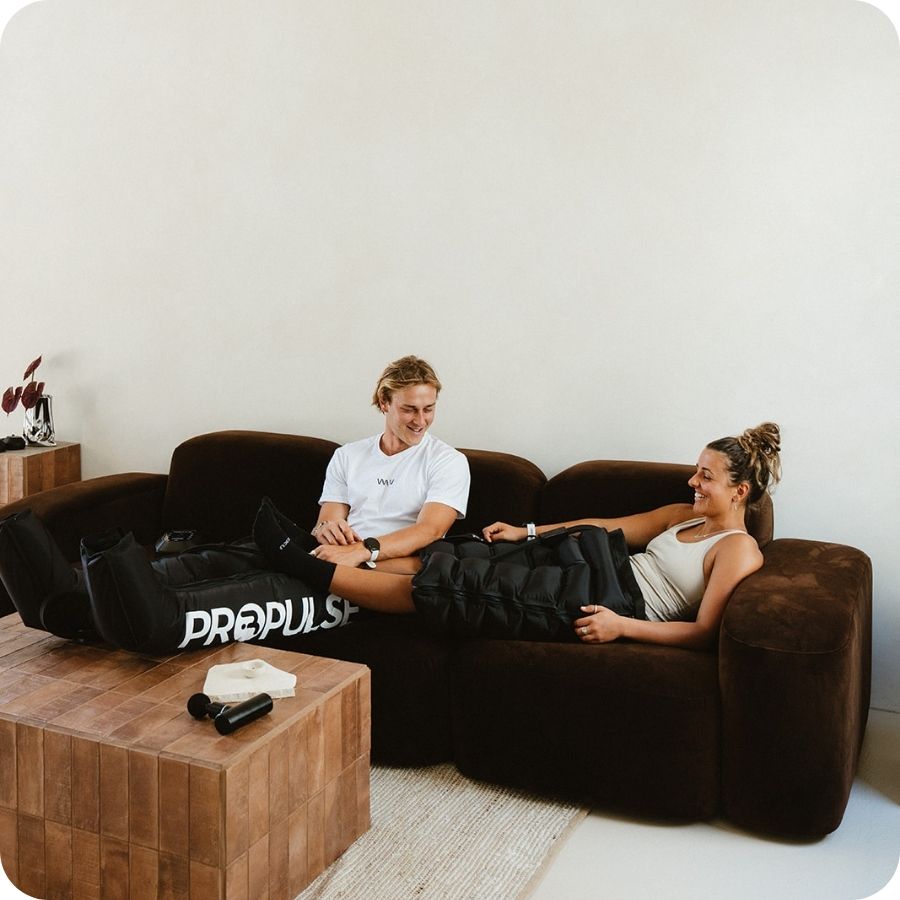
- You recover at home and want control: PROPulse. Pro level. Switch individual chambers off and adjust pressure in 5 mmHg steps.
- You want recovery for your whole lower body: Lower Body Compression.
Frequently asked questions
How long does it take to recover from a football or netball game?
It depends on your minutes, the contact and how well you sleep. In professional football, muscle injury rates rise with four days or fewer between matches (Bengtsson et al., 2013), so make those days count.
Should I use compression boots after every game?
Yes, if you have another game or hard session within a few days. Daily use has been studied over five weeks in handball players (Nuell et al., 2025).
Why can't I sleep after a night game?
Your body is still wired. Stress hormones stay high at bedtime after night games (Juliff et al., 2018). A wind-down routine and a sleep-in the next day help.
Ice bath or compression boots after a game?
Both work. Cold water helps power and soreness after high-intensity exercise (Moore et al., 2022). Boots reduce soreness and are easy to use at home (Maia et al., 2024). Many players use cold water at the ground and boots at home.
Do compression boots help with corked thighs or strains?
Boots are a recovery tool, not an injury treatment. We're not medical doctors, so get any persistent pain or knocks checked by your GP or a physio.
See also How Often Should You Use Compression Boots? and Do Compression Boots Actually Work?
References
- Bengtsson H, Ekstrand J, Hägglund M. Muscle injury rates in professional football increase with fixture congestion: an 11-year follow-up of the UEFA Champions League injury study. Br J Sports Med. 2013;47:743-747. doi:10.1136/bjsports-2013-092383
- Julian R, Page RM, Harper LD. The effect of fixture congestion on performance during professional male soccer match-play: a systematic critical review with meta-analysis. Sports Med. 2021;51:255-273. doi:10.1007/s40279-020-01359-9
- Roberts SSH, Teo WP, Warmington SA. Effects of training and competition on the sleep of elite athletes: a systematic review and meta-analysis. Br J Sports Med. 2019;53:513-522. doi:10.1136/bjsports-2018-099322
- Juliff LE, Peiffer JJ, Halson SL. Night games and sleep: physiological, neuroendocrine, and psychometric mechanisms. Int J Sports Physiol Perform. 2018;13:867-873. ACU Research Bank
- Fowler P, et al. Effects of regular away travel on training loads, recovery, and injury rates in professional Australian soccer players. Int J Sports Physiol Perform. 2015;10:546-552. UTS repository
- Fowler P, Duffield R, Howle K, Waterson A, Vaile J. Effects of northbound long-haul international air travel on sleep quantity and subjective jet lag and wellness in professional Australian soccer players. Int J Sports Physiol Perform. 2015. UTS repository (PDF)
- Dupuy O, Douzi W, Theurot D, Bosquet L, Dugué B. An evidence-based approach for choosing post-exercise recovery techniques to reduce markers of muscle damage, soreness, fatigue, and inflammation: a systematic review with meta-analysis. Front Physiol. 2018;9:403. doi:10.3389/fphys.2018.00403
- Moore E, Fuller JT, Buckley JD, et al. Impact of cold-water immersion compared with passive recovery following a single bout of strenuous exercise on athletic performance in physically active participants: a systematic review with meta-analysis and meta-regression. Sports Med. 2022;52:1667-1688. doi:10.1007/s40279-022-01644-9
- Maia F, Nakamura FY, Sarmento H, Marcelino R, Ribeiro J. Effects of lower-limb intermittent pneumatic compression on sports recovery: a systematic review and meta-analysis. Biol Sport. 2024;41:263-275. doi:10.5114/biolsport.2024.133665
- Nuell S, Rabassa J, Bárcena C, Espar J, Munné C, García I. Effects of daily use of intermittent pneumatic compression in competitive handball players: a randomized controlled trial. Biol Sport. 2025;42:311-321. doi:10.5114/biolsport.2025.151656

About the author. Dr Peter Fowler holds a PhD in sport science (Charles Sturt University), where he researched sleep and recovery in athletes, and an MSc in exercise physiology (Loughborough University). He is an ESSA Accredited Sports Scientist (Level 2). He has spent more than 15 years in high-performance sport and athlete recovery, including roles at the Australian Institute of Sport, Tottenham Hotspur and Aspetar in Qatar. He co-founded The Recovery Project with Amanda Fowler. Read Dr Fowler's full background.