Recovery After Long-Haul Travel: Beat Jet Lag and Travel Fatigue
 Dr Peter Fowler, PhDSport scientist and co-founder

In this guide
The short answer long-haul flights cause two problems: travel fatigue from the journey and jet lag from crossing time zones. Arrive well rested, sleep on the plane when it's night back home, then use daylight, meal times and easy exercise to reset your body clock. Expect the first 72 hours after flying east to be the hardest.
What is the difference between travel fatigue and jet lag?
They feel similar, but they aren't the same thing. The international consensus on athlete travel, which I co-authored, defines them this way (Janse van Rensburg et al., 2021):
- Travel fatigue. The exhaustion and tiredness that come with any long journey. It can build up over a season of regular travel.
- Jet lag. More severe and shorter lived. It follows fast travel across three or more time zones, when your body clock is out of sync with local time.
A long domestic flight gives you travel fatigue. Brisbane to London gives you both.
What did research on athletes find?
Travel fatigue and jet lag in athletes were a big part of my sleep research. Here's what my colleagues and I found.
- Long travel cuts sleep. In a simulated 24 hour international trip, sleep quantity and quality dropped compared with a normal night. Repeat sprint performance was lower the next afternoon, and people felt more fatigued (Fowler et al., 2015).
- East is harder than west. Ten trained men flew 21 hours across eight time zones between Australia and Qatar, once in each direction. After flying east, they slept less and felt worse jet lag, fatigue and motivation. Sprint and repeat sprint performance dropped, mostly within 72 hours of arriving (Fowler et al., 2017a).
- Even elite teams feel it. When the Australian national football team flew 19 hours east to Brazil for the 2014 World Cup, sleep on the first night fell from 8.3 hours to 5.8 hours. Jet lag stayed above normal for four days (Fowler et al., 2017b).
- A plan works. In a follow-up trial, a light exposure and sleep hygiene plan after a 21 hour eastward trip led to longer sleep during and after travel. Jump power and sprint times were better over the next four days than without the plan (Fowler et al., 2021).
My reading: you can't avoid jet lag completely. But a simple plan around light and sleep makes a real difference to how you feel and perform.
How long does jet lag last?
The consensus gives a rule of thumb (Janse van Rensburg et al., 2021):
| Direction | Natural adjustment | Example |
|---|---|---|
| Westward | About half a day per time zone | Brisbane to Dubai, 6 time zones: about 3 days |
| Eastward | About one day per time zone | Perth to Auckland, 4 or 5 time zones depending on daylight saving: about 4 to 5 days |
Your body clock finds it easier to stay up later than to go to bed earlier. That's why flying east hurts more.
How should you prepare before a long-haul flight?
- Arrive at the airport rested. Bank sleep in the nights before you fly. If you're already short on sleep, don't count on catching up on the plane (Janse van Rensburg et al., 2021).
- Shorten the gap. Keep the time between your last proper sleep at home and your first at the destination as short as you can.
- Ease training. Swap long, high-volume sessions for shorter ones in the days before you fly.
- Plan food and fluid. Know what you'll eat and drink before you board.
- Charge your gear. If you travel with PROAir Wireless boots, charge them before you leave. A full charge takes about 3.9 hours.
What should you do during the flight?
- Sleep at the right time. I suggest sleeping when it's night at home, since your sleep will be disrupted either way (Fowler, 2015).
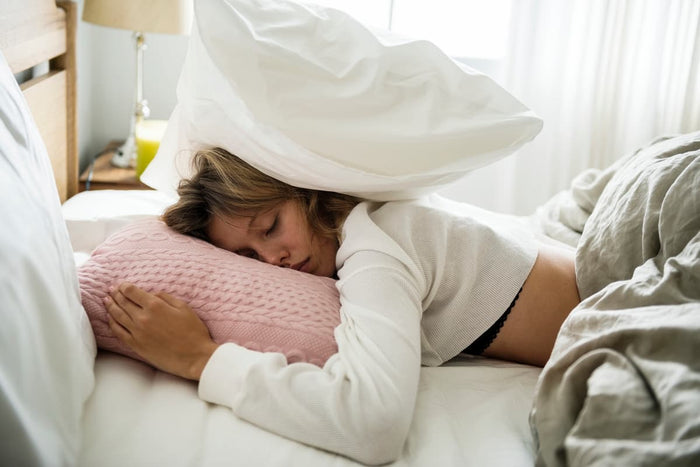
- Set up for sleep. Eye mask, earplugs or noise-cancelling headphones, a pillow and full recline (Janse van Rensburg et al., 2021).
- Wear compression socks and loose clothes. The consensus recommends medical-grade compression in flight.
- Move. Walk the aisle, stretch, and get fresh air at stopovers.
- Sip water often. Avoid alcohol completely, and avoid caffeine for at least 6 hours before you plan to sleep.
- Eat light. Smaller, regular meals and fibre-rich snacks.
What should you do after you land?
- Use light on purpose. After flying west, seek light in the evening and avoid it in the morning, by your body clock. After flying east, do the opposite (Fowler, 2015). Sunglasses help you avoid light at the wrong time.
- Time your caffeine. Have it in the local morning and skip it from late afternoon (Janse van Rensburg et al., 2021).
- Nap early and briefly. Keep naps short and early in the day so they don't ruin your first night.
- Train easy. Keep sessions low to moderate for the first few days, and time them with your light exposure (Janse van Rensburg et al., 2021).
- Eat on local time. Move meals to the new time zone straight away.
- Protect the first nights. A cool, dark, quiet room and no screens in bed.
- Ask before using melatonin. Results are mixed, so talk to your GP first (Fowler, 2015).
The research behind sleep at home applies doubly on the road. See The Importance of Sleep and Sleep monitoring and elite sport.
Where do compression boots fit after a flight?
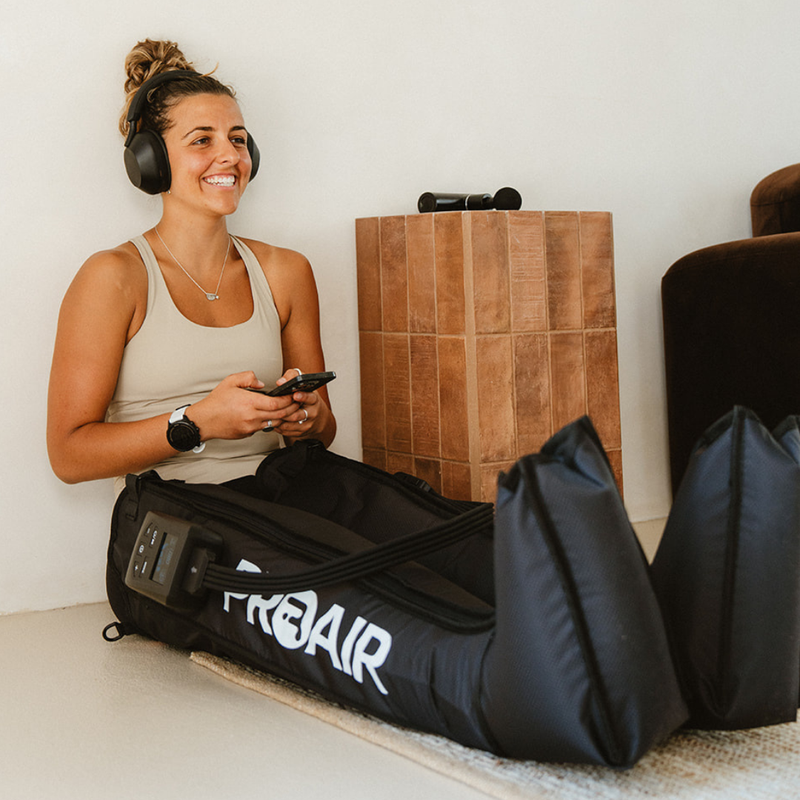
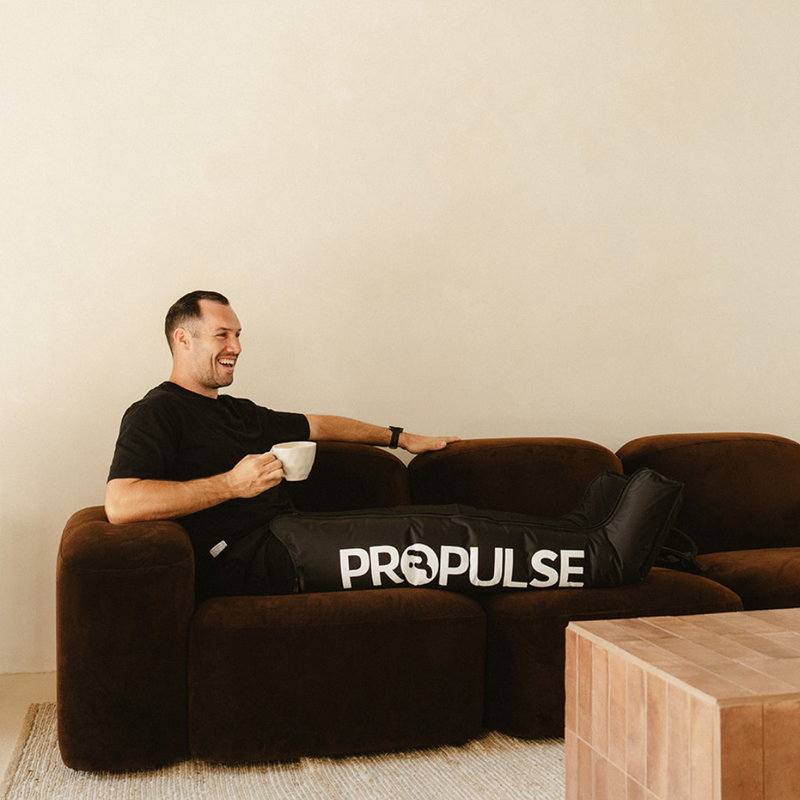
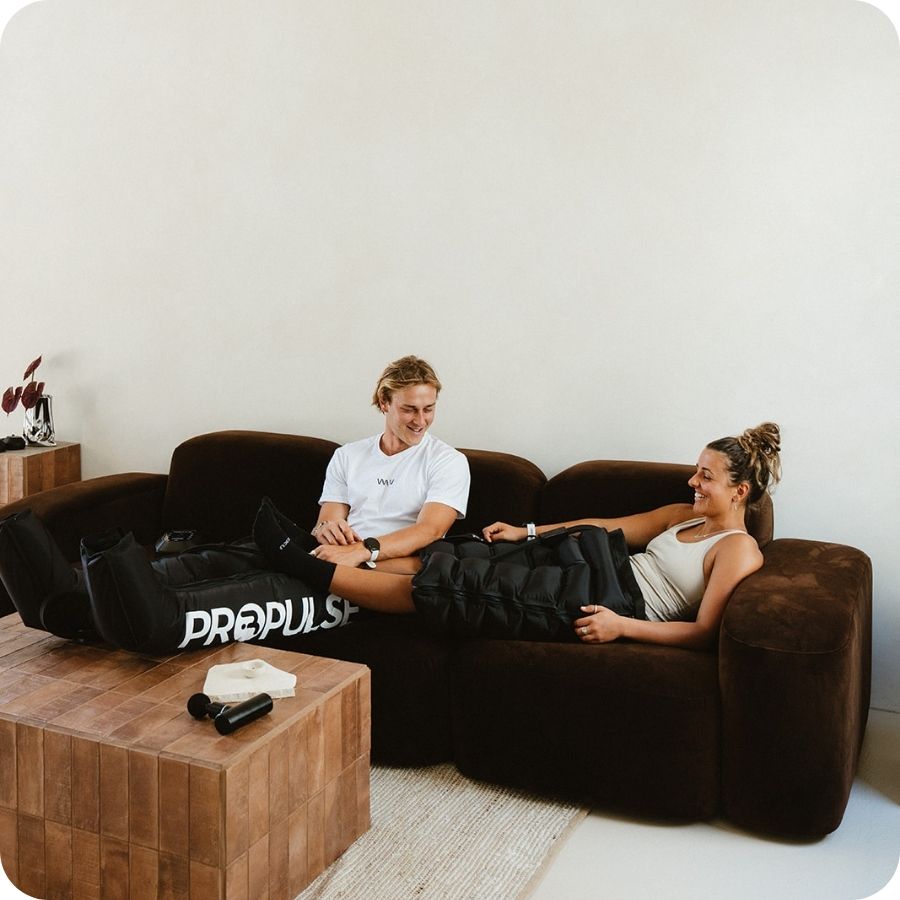
After hours in a seat, most people's legs feel heavy and stiff. A boots session once you reach your hotel is an easy way to feel fresher. Do it lying down, ideally during your planned rest time so it doesn't eat into daylight exposure.
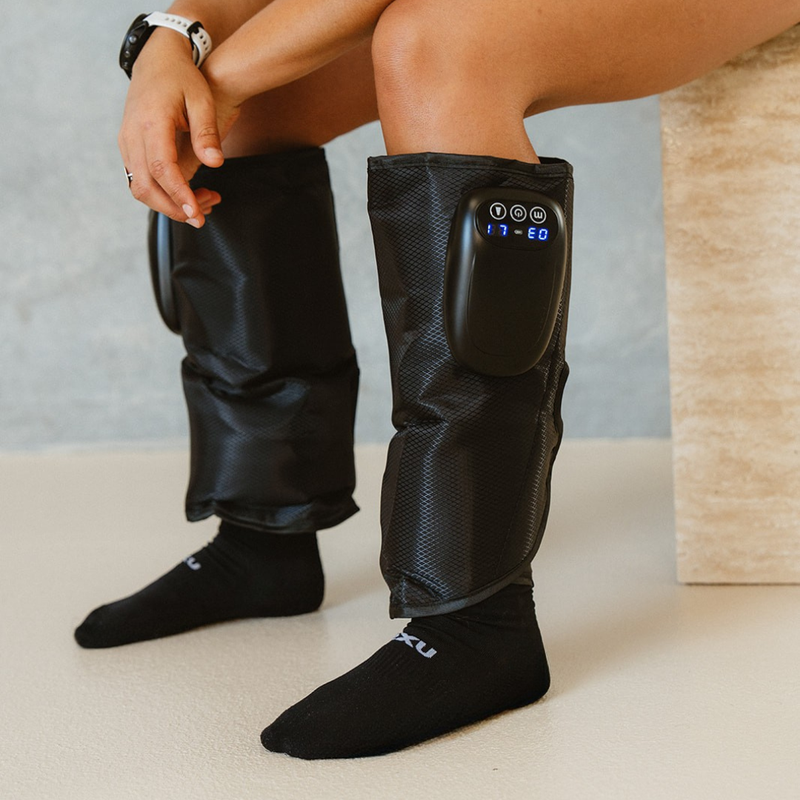
- PROAir Wireless. Mid level and fully wireless, with the pump and controls built in. No cord and no power point needed during a session, so it suits hotel rooms. Sessions run 15, 30 or 45 minutes.
- PROLite. Entry level. Small calf sleeves for travel.
New to boots? Pack the quick start card. For more on wireless options, read Best Wireless Compression Boots Australia 2026.
Frequently asked questions
Is jet lag worse flying east or west?
East. In my research, eastward travel caused shorter sleep and worse jet lag, fatigue and performance than westward travel (Fowler et al., 2017a).
How many days before an event should I arrive?
As many as you can. Allow about one day per time zone flying east and half a day per time zone flying west (Janse van Rensburg et al., 2021).
Should I sleep on the plane?
Yes, ideally when it's night back home (Fowler, 2015). Use an eye mask and earplugs, and skip the alcohol.
Can I use compression boots on the plane?
Use compression socks in flight, as the consensus recommends, and save the boots for when you arrive (Janse van Rensburg et al., 2021).
Do compression boots prevent blood clots on long flights?
No. Boots are a recovery tool, not a medical treatment. We're not medical doctors, so if you have a history of blood clots or circulation problems, talk to your GP before a long flight.
What's the fastest way to get over jet lag?
Get light at the right time of day and protect your sleep. That combination improved sleep, speed and power after a 21 hour flight (Fowler et al., 2021).
See also Recovery for Team Sport Players and Compression Boots for Runners.
References
- Janse van Rensburg DC, Jansen van Rensburg A, Fowler PM, et al. Managing travel fatigue and jet lag in athletes: a review and consensus statement. Sports Med. 2021;51:2029-2050. doi:10.1007/s40279-021-01502-0
- Janse van Rensburg DC, Jansen van Rensburg A, Fowler P, et al. How to manage travel fatigue and jet lag in athletes? A systematic review of interventions. Br J Sports Med. 2020;54:960-968. doi:10.1136/bjsports-2019-101635
- Fowler P, Duffield R, Vaile J. Effects of simulated domestic and international air travel on sleep, performance, and recovery for team sports. Scand J Med Sci Sports. 2015;25:441-451. doi:10.1111/sms.12227
- Fowler PM, Knez W, Crowcroft S, et al. Greater effect of east versus west travel on jet lag, sleep, and team sport performance. Med Sci Sports Exerc. 2017;49:2548-2561. doi:10.1249/MSS.0000000000001374
- Fowler PM, et al. Effects of long-haul transmeridian travel on player preparedness: case study of a national team at the 2014 FIFA World Cup. J Sci Med Sport. 2017. UTS repository (PDF)
- Fowler PM, Knez W, Thornton HR, et al. Sleep hygiene and light exposure can improve performance following long-haul air travel. Int J Sports Physiol Perform. 2021;16:517-526. doi:10.1123/ijspp.2019-0931
- Fowler PM. Recovery following long-haul international travel in team sport athletes. Aspetar Sports Med J. 2015;4(3). journal.aspetar.com

About the author. Dr Peter Fowler holds a PhD in sport science (Charles Sturt University), where he researched sleep and recovery in athletes, and an MSc in exercise physiology (Loughborough University). He is an ESSA Accredited Sports Scientist (Level 2). He has spent more than 15 years in high-performance sport and athlete recovery, including roles at the Australian Institute of Sport, Tottenham Hotspur and Aspetar in Qatar. He co-founded The Recovery Project with Amanda Fowler. Read Dr Fowler's full background.