
By Dr Peter Fowler, PhD (Sport Science). Updated 13 October 2026.
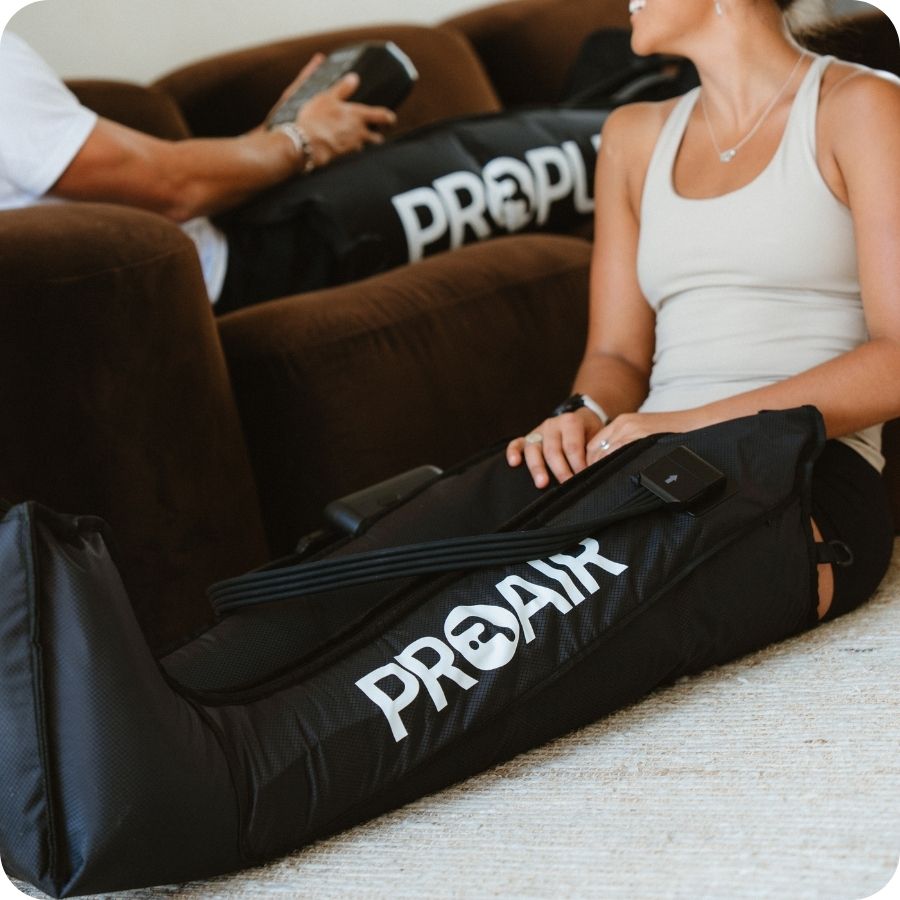
The short answer: use compression boots for 20 to 30 minutes, up to once a day, on the days your legs need it most. That session length is what most research has used (Maia et al., 2024). Daily use has been studied in athletes for five weeks, with slight benefits to how recovered they felt (Nuell et al., 2025). There's no evidence that longer sessions, higher pressure or multiple sessions a day give you more benefit.
How long should a compression boot session be?
20 to 30 minutes. A 2024 meta-analysis of 17 studies found protocols of about 20 to 30 minutes at about 80 mmHg were the most commonly used (Maia et al., 2024). Individual studies ranged from 15 minutes (Sands et al., 2014; Gu et al., 2025) to 60 minutes (Martin et al., 2015).
Longer doesn't appear to be better. Sessions of an hour or more didn't speed up muscle glycogen refuelling in two biopsy studies (Keck et al., 2015; Kim et al., 2021). And the boost in blood flow fades within a couple of minutes of stopping (Maia et al., 2024, IJSPP), so there's no "stored" effect to build up.
How often should you use compression boots?
Up to once a day, when it's useful. The strongest finding in the research is that boots make legs feel less fatigued straight after a session (Hoffman et al., 2016; Heapy et al., 2018). That suits using them when your legs feel heavy, rather than on a fixed schedule.
The best evidence on regular use comes from a 2025 trial in competitive handball players. Those who used boots daily for five weeks reported slightly better recovery and showed some changes in blood pressure regulation compared with a control group (Nuell et al., 2025). Ultramarathon runners in another trial had treatments on four consecutive days after their race, with short-term benefits to fatigue but no lasting effect (Heapy et al., 2018).
A practical routine for different situations
The table below is my practical guidance. It's based on the research above, but no study has tested every one of these scenarios directly.
| Situation | How I'd use boots |
|---|---|
| After a hard session or long run | One 20 to 30 minute session, ideally within a few hours. This matches how most studies used them. |
| Back-to-back training days | One session each evening if your legs feel heavy. |
| Heavy training block | Daily is reasonable. Treat it as an extra on top of sleep and food, never a reason to cut either short. |
| Rest days | Optional. Use them if you enjoy it or your legs still feel heavy. Skip them if not. |
| After a race or big event | A session the same day, then daily for a few days if it helps. Expect relief from fatigue, not faster recovery of performance (Hoffman et al., 2016). |
| Race week | Stick to settings you already know. Race week isn't the time to try a much higher pressure. |
| Long day on your feet | A short evening session for comfort. Research in this group is limited. |
| After a long flight or drive | A session once you arrive, if your legs feel heavy. Get up and move, hydrate and protect your sleep first. |
What pressure should you use?
Start at the lowest setting and build to a firm but comfortable squeeze. Around 80 mmHg is the most common research setting (Maia et al., 2024). A study comparing 80 and 135 mmHg found no extra benefit from the higher pressure for range of motion (Yanaoka et al., 2022). Higher pressure does increase blood flow more during the session (Maia et al., 2024, IJSPP), but that hasn't been shown to improve recovery outcomes.
If anything tingles, goes numb or hurts, turn it down or stop.
Why more isn't better
- The main effect is short-term. Fatigue relief shows up straight after a session and rarely lasts into the following days (Hoffman et al., 2016). Stacking sessions doesn't change that.
- Longer sessions haven't shown extra benefit in the studies above.
- Time is a cost. If an extra hour in boots comes out of your sleep, you've made a bad trade. Sleep is the foundation of recovery, and it's been the focus of most of my own research.
- The basics come first. A 2023 review rated recovery boots below foam rolling, compression garments, cryotherapy and active recovery on strength of evidence (Driller & Leabeater, 2023).
Can you use compression boots too much?
For healthy people, I haven't found research reporting harm from regular use at sensible pressures. But I also haven't found research showing benefit from more than one session a day. Pneumatic compression has conditions where it shouldn't be used or needs care (Schwahn-Schreiber et al., 2018). Speak to your doctor first if you have a known or suspected blood clot, a circulation, heart or kidney condition, an acute injury, open wounds on your legs, or you're pregnant.
Frequently asked questions
Can I use compression boots every day?
Yes, if you're healthy and find them helpful. Daily use for five weeks has been studied in athletes (Nuell et al., 2025).
Can I use compression boots twice a day?
There's no evidence it adds benefit. One well-timed session is enough.
How long should I wear compression boots after a workout?
20 to 30 minutes.
Is it OK to fall asleep in compression boots?
Use the timer so the session ends on its own, and follow your boots' instructions. Don't wear them overnight.
Should I use compression boots before training?
Most research applies them after exercise. Evidence for using them beforehand is limited, so I'd keep them for afterwards.
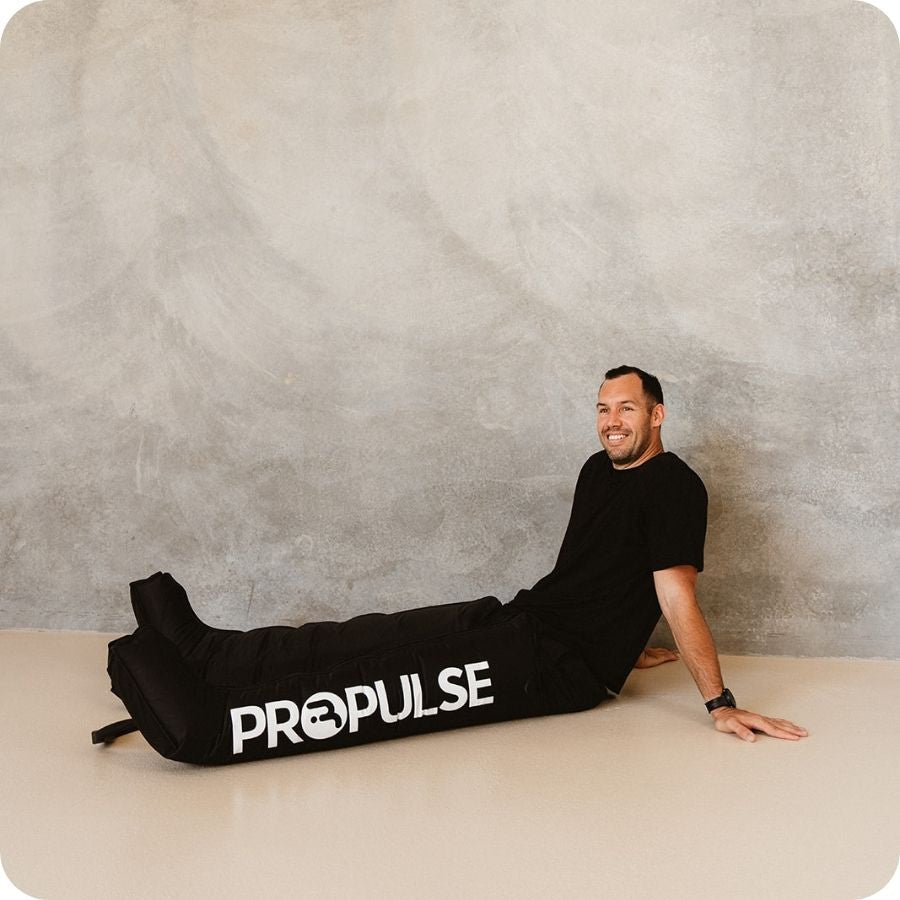
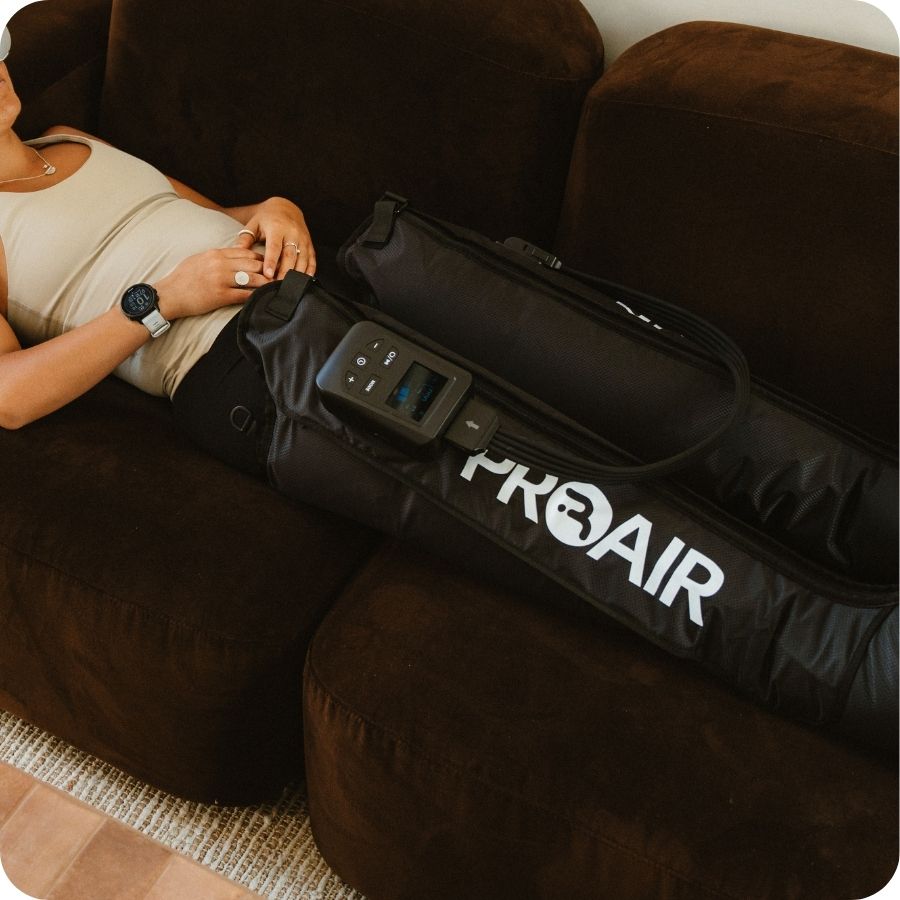
Training for a race? See Compression Boots for Runners. New to compression boots? Start with Compression Boots: The Complete Australian Guide and Do Compression Boots Actually Work? Choosing a pair? See Best Compression Boots Australia 2026, or our PROAir Wireless and PROPulse.
References
- Maia F, Nakamura FY, Sarmento H, Marcelino R, Ribeiro J. Effects of lower-limb intermittent pneumatic compression on sports recovery: a systematic review and meta-analysis. Biol Sport. 2024;41:263-275. doi:10.5114/biolsport.2024.133665
- Maia F, Machado MVB, Silva G, Nakamura FY, Ribeiro J. Hemodynamic effects of intermittent pneumatic compression on athletes: a double-blinded randomized crossover study. Int J Sports Physiol Perform. 2024;19:932-938. doi:10.1123/ijspp.2024-0017
- Nuell S, Rabassa J, Bárcena C, Espar J, Munné C, García I. Effects of daily use of intermittent pneumatic compression in competitive handball players: a randomized controlled trial. Biol Sport. 2025;42:311-321. doi:10.5114/biolsport.2025.151656
- Sands WA, Murray MB, Murray SR, et al. Peristaltic pulse dynamic compression of the lower extremity enhances flexibility. J Strength Cond Res. 2014;28:1058-1064. doi:10.1519/JSC.0000000000000244
- Gu Z, Dai J, Xu K, et al. Effects of intermittent pneumatic compression on delayed onset muscle soreness and recovery of muscular fatigue. PM R. 2025;17:1080-1090. doi:10.1002/pmrj.13377
- Martin JS, Borges AR, Beck DT. Peripheral conduit and resistance artery function are improved following a single, 1-h bout of peristaltic pulse external pneumatic compression. Eur J Appl Physiol. 2015;115:2019-2029. doi:10.1007/s00421-015-3187-8
- Keck NA, Cuddy JS, Hailes WS, Dumke CL, Ruby BC. Effects of commercially available pneumatic compression on muscle glycogen recovery after exercise. J Strength Cond Res. 2015;29:379-385. doi:10.1519/JSC.0000000000000772
- Kim K, Kargl CK, Ro B, et al. Neither peristaltic pulse dynamic compressions nor heat therapy accelerate glycogen resynthesis after intermittent running. Med Sci Sports Exerc. 2021;53:2425-2435. doi:10.1249/MSS.0000000000002713
- Hoffman MD, Badowski N, Chin J, Stuempfle KJ. A randomized controlled trial of massage and pneumatic compression for ultramarathon recovery. J Orthop Sports Phys Ther. 2016;46:320-326. doi:10.2519/jospt.2016.6455
- Heapy AM, Hoffman MD, Verhagen HH, et al. A randomized controlled trial of manual therapy and pneumatic compression for recovery from prolonged running: an extended study. Res Sports Med. 2018;26:354-364. doi:10.1080/15438627.2018.1447469
- Yanaoka T, Numata U, Nagano K, Kurosaka S, Kawashima H. Effects of different intermittent pneumatic compression stimuli on ankle dorsiflexion range of motion. Front Physiol. 2022;13:1054806. doi:10.3389/fphys.2022.1054806
- Driller M, Leabeater A. Fundamentals or icing on top of the cake? A narrative review of recovery strategies and devices for athletes. Sports (Basel). 2023;11:213. doi:10.3390/sports11110213
- Schwahn-Schreiber C, Breu FX, Rabe E, et al. S1 guideline on intermittent pneumatic compression (IPC). Hautarzt. 2018;69:662-673. doi:10.1007/s00105-018-4219-1
About the author. Dr Peter Fowler holds a PhD in sport science (Charles Sturt University), where he researched sleep and recovery in athletes, and an MSc in exercise physiology (Loughborough University). He is an ESSA Accredited Sports Scientist (Level 2). He has spent more than 15 years in high-performance sport and athlete recovery, including roles at the Australian Institute of Sport, Tottenham Hotspur and Aspetar in Qatar. He co-owns The Recovery Project. Read Dr Fowler's full background.

Leave a comment
All comments are moderated before being published.
This site is protected by hCaptcha and the hCaptcha Privacy Policy and Terms of Service apply.