Active vs Passive Recovery: What Works and How to Plan Your Week
 Dr Peter Fowler, PhDSport scientist and co-founder

In this guide
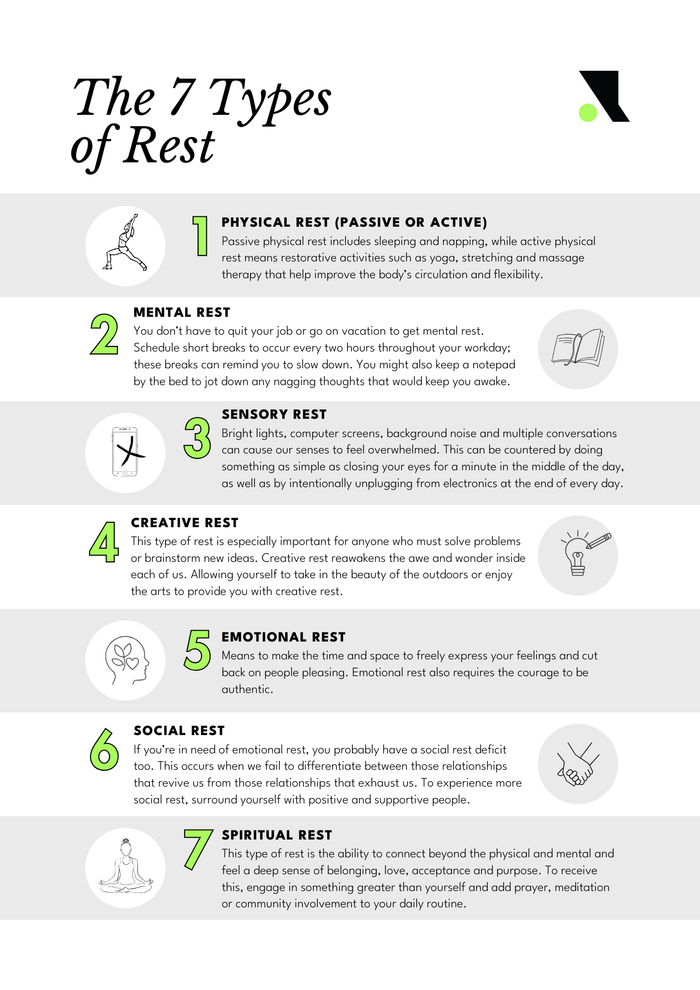
The short answer active recovery is light movement, like an easy walk, spin or swim. Passive recovery is everything done to you or while you rest, like sleep, massage, compression and cold water. You need both. Build the week on passive foundations, then add short active sessions on your easy days.
What is the difference between active and passive recovery?
The 2018 international consensus on recovery splits it this way (Kellmann et al., 2018):
- Active recovery. Physical activity aimed at offsetting the metabolic effects of fatigue. Think a 10 minute cool-down, a 20 minute walk, an easy spin or a pool session.
- Passive recovery. External methods applied while you stay still. Massage, compression, cold water immersion and sauna all sit here. So does simply resting.
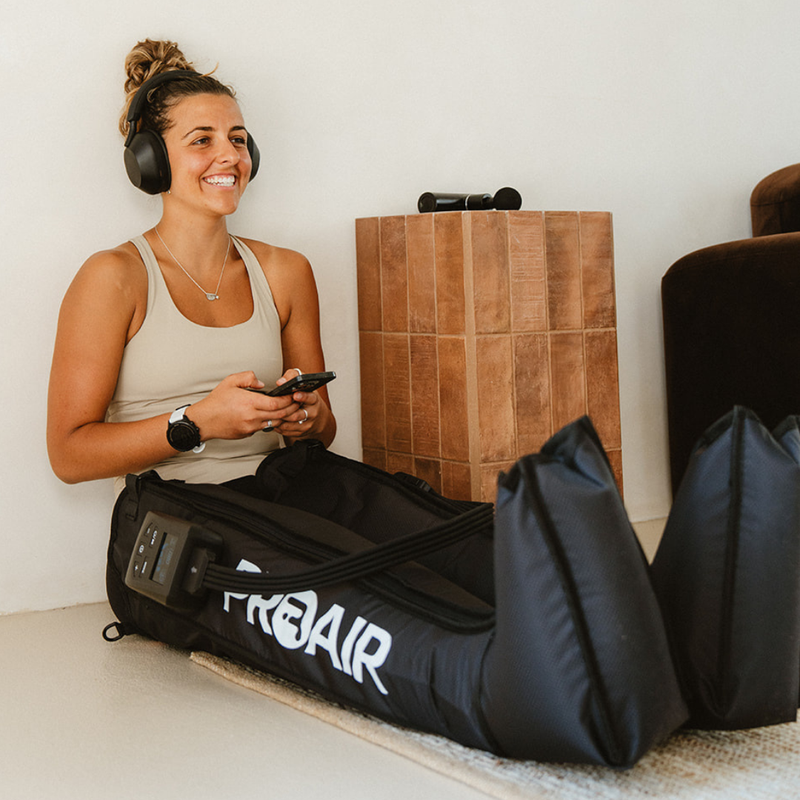
People often use "passive recovery" to mean doing nothing. That's part of it. But lying in compression boots, getting a massage or sleeping for eight hours are also passive. They just aren't lazy.
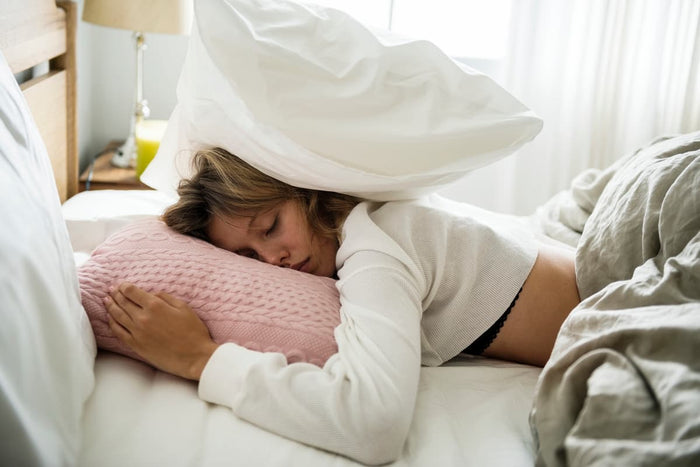
The consensus makes two more points I agree with. Sleep plays an essential role in both physical and psychological recovery. And combining several methods appears to give the fastest recovery (Kellmann et al., 2018).
What does the research say about active recovery?
- Cool-downs. A large review found an active cool-down clears lactate from the blood faster, but not necessarily from the muscle. It was largely ineffective for same day and next day performance, although some studies reported next day benefits. It did not blunt long-term training gains (Van Hooren and Peake, 2018).
- Soreness. A meta-analysis of recovery techniques found active recovery reduced delayed onset muscle soreness with a large effect. It did not change how tired people felt (Dupuy et al., 2018).
My reading: active recovery won't speed up your next session much. Its real value is that easy movement eases soreness and gets you outside. It also stops a "recovery day" turning into a day on the couch scrolling your phone.
What does the research say about passive recovery?
- Massage. In the same meta-analysis, massage was the most effective method for reducing soreness and perceived fatigue. Compression garments and water immersion also reduced both (Dupuy et al., 2018).
- Cold water. Compared with resting, cold water immersion after high-intensity exercise improved muscle power, soreness and perceived recovery 24 hours later (Moore et al., 2022).
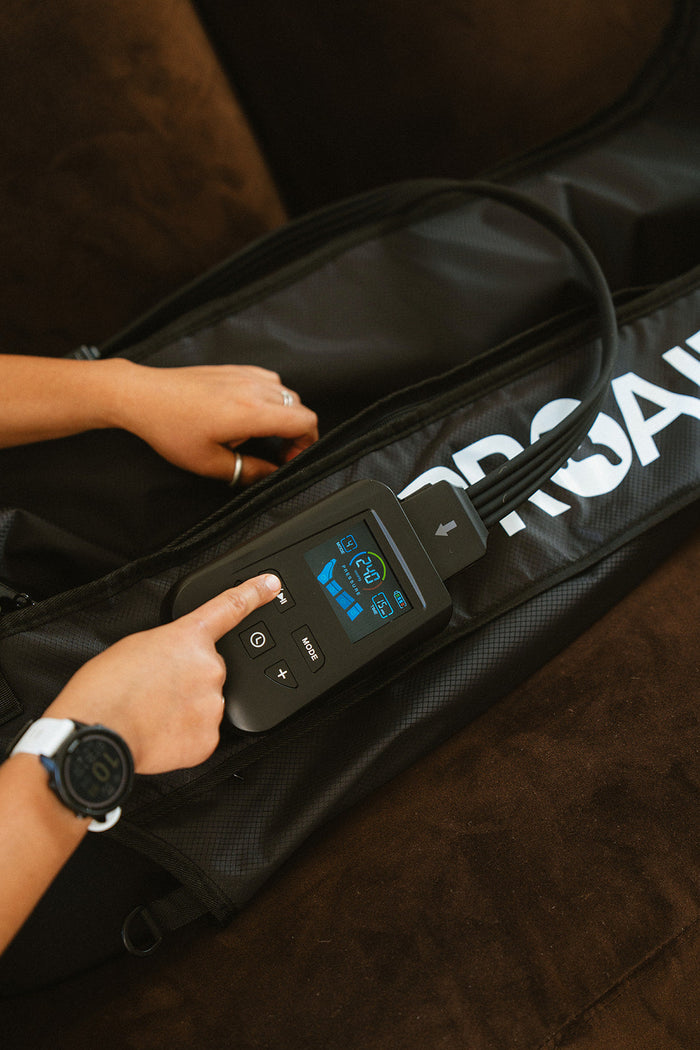
- Compression boots. A 2024 meta-analysis of 17 studies found a small to moderate reduction in soreness. Most studies used 20 to 30 minutes at about 80 mmHg (Maia et al., 2024).
My reading: the passive tools have the stronger evidence for how you feel. Sleep and food sit underneath all of them. More on that in Do Compression Boots Actually Work?
Where do they sit on the Recovery Pyramid?
I built the Recovery Pyramid to show what matters most. You start at the bottom and only move up once the level below is solid.
- Training programme. If the plan is wrong, no recovery tool will save you.
- Sleep, nutrition and hydration. Passive foundations.
- Rest, relaxation and stress management. Also passive foundations.
- Water immersion. The first supplemental layer.
- Compression, massage and active recovery. Supplemental tools you choose based on the week.
- Mobility, mindfulness, breathing and yoga. The finishing touches.
Notice where active recovery lives. It sits next to compression and massage, not under sleep. That's deliberate. A walk is great. It doesn't replace eight hours in bed. You can print the Recovery Pyramid and stick it on the fridge.
How should you programme active and passive recovery across a week?
Here's how I'd set up a typical week with three hard sessions. Swap the days to suit your own schedule.
| Day | Training | Active recovery | Passive recovery |
|---|---|---|---|
| Monday | Hard session | Optional 10 minute easy cool-down | Recovery meal, 20 to 30 minutes in boots, 7 to 9 hours sleep |
| Tuesday | Easy day | 20 minute walk, easy spin or pool session | 15 minutes of stretching or mobility |
| Wednesday | Hard session | Optional cool-down | Cold water or boots, early night |
| Thursday | Rest or light | Walk outdoors | Nap or 15 minutes of mindfulness, massage if you have one booked |
| Friday | Moderate session | None needed | Protect sleep before the weekend |
| Saturday | Long session or game | Easy cool-down | Refuel and rehydrate, boots that evening |
| Sunday | Rest | Family walk, swim or bike ride | Time with family and friends, sleep in if you need it |
Three rules I use when I programme this:
- Passive after hard days. After a hard session your body needs fuel, sleep and stillness. That's when boots, cold water or massage earn their place.
- Active on easy days. The day after a hard session, light movement keeps you loose and eases soreness (Dupuy et al., 2018). Keep it truly easy. You should be able to chat.
- Stack them. Combining methods seems to work best (Kellmann et al., 2018). For example, a 20 minute walk in the afternoon and 30 minutes in boots after dinner.
To keep score, use the Recovery Points calculator. On my system, 20 minutes of easy active recovery earns 15 points and 20 to 30 minutes in boots earns 10. Aim for at least 60 points a day. The full system is explained in How many recovery points do you score?
Which passive recovery tools fit at home?
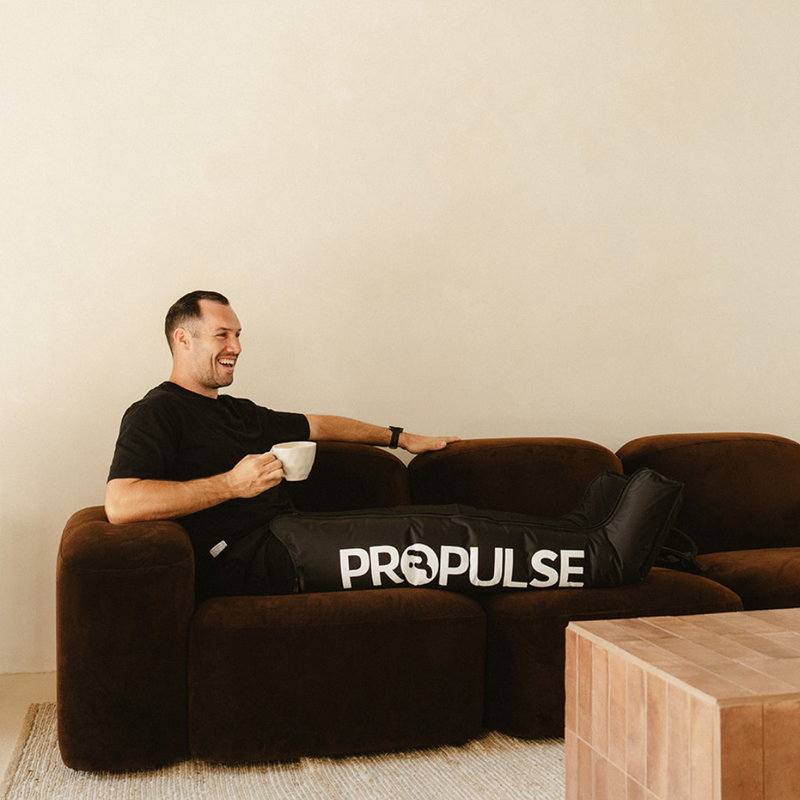
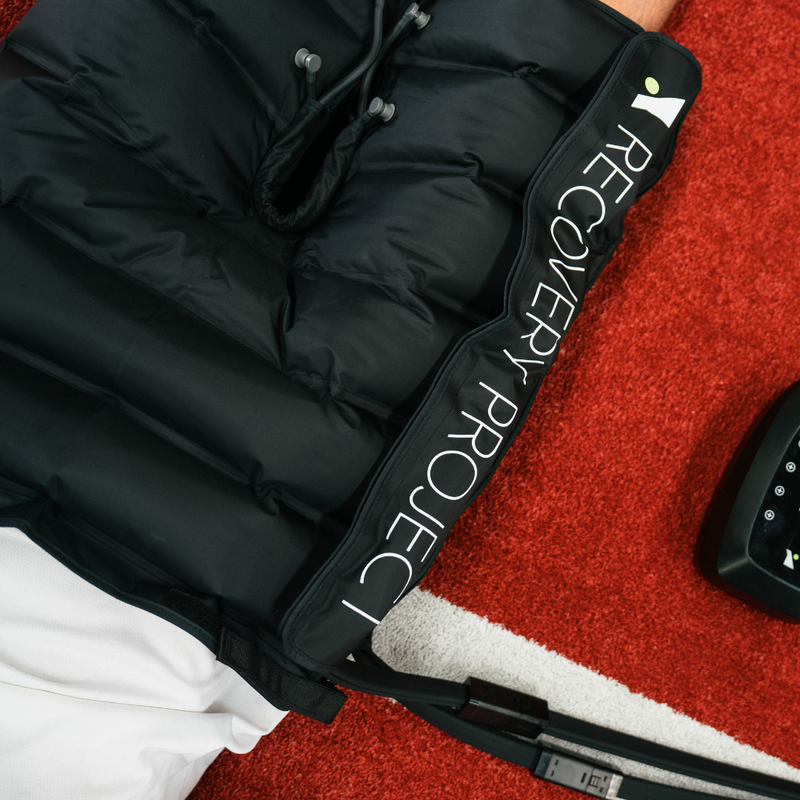
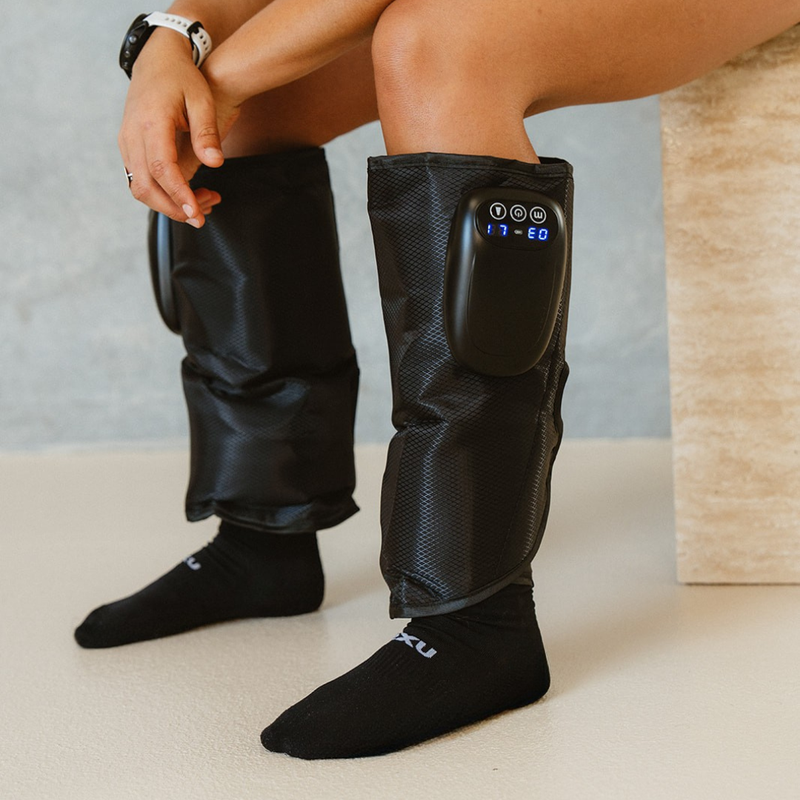
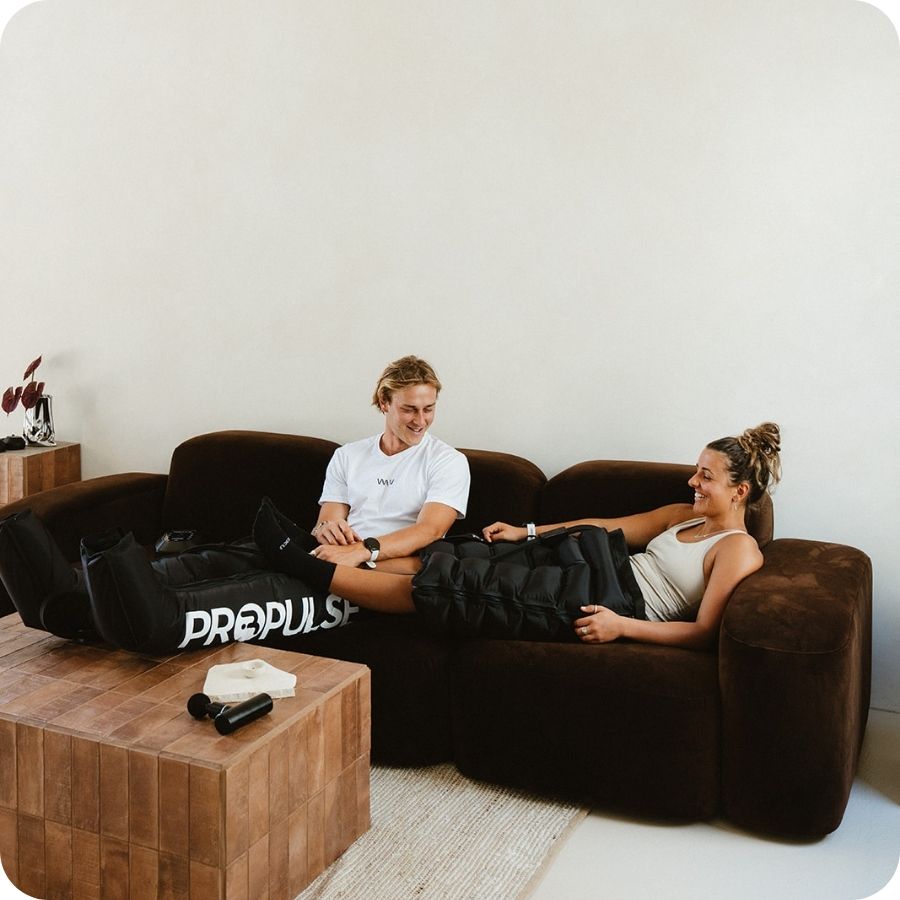
Compression boots are the easiest passive tool to use every week. You lie back, switch them on and do your mental recovery at the same time.
- You want to recover anywhere: PROAir Wireless. Mid level, fully wireless, 30 to 240 mmHg in seven settings.
- You want full control at home: PROPulse. Pro level. Six chambers you can switch off individually, with pressure in 5 mmHg steps.
- It's mostly your calves: PROLite. Entry level. Three modes and three intensity levels for calves or arms.
Frequently asked questions
Is active recovery better than passive recovery?
No. Neither is better on its own. Passive methods like massage and compression garments have stronger evidence for soreness and fatigue (Dupuy et al., 2018). Active recovery is a good habit for easy days.
Are compression boots active or passive recovery?
Passive. The boots do the work while you lie still (Kellmann et al., 2018).
Should I do a cool-down after every session?
It's optional. Cool-downs don't reliably improve your next session, but they don't hurt your training gains either (Van Hooren and Peake, 2018). Do one if you enjoy it.
How hard should an active recovery session be?
Easy. You should be able to hold a conversation the whole time. Twenty minutes is plenty.
Can I do active and passive recovery on the same day?
Yes. Combining methods appears to give the fastest recovery (Kellmann et al., 2018).
What if I'm sore for days?
Normal soreness fades in a few days. Boots are a recovery tool, not an injury treatment. We're not medical doctors, so get any persistent pain checked by your GP or a physio.
See also What is Recovery?, How Often Should You Use Compression Boots? and The Importance of Sleep.
References
- Kellmann M, Bertollo M, Bosquet L, et al. Recovery and performance in sport: consensus statement. Int J Sports Physiol Perform. 2018;13:240-245. doi:10.1123/ijspp.2017-0759
- Van Hooren B, Peake JM. Do we need a cool-down after exercise? A narrative review of the psychophysiological effects and the effects on performance, injuries and the long-term adaptive response. Sports Med. 2018;48:1575-1595. doi:10.1007/s40279-018-0916-2
- Dupuy O, Douzi W, Theurot D, Bosquet L, Dugué B. An evidence-based approach for choosing post-exercise recovery techniques to reduce markers of muscle damage, soreness, fatigue, and inflammation: a systematic review with meta-analysis. Front Physiol. 2018;9:403. doi:10.3389/fphys.2018.00403
- Moore E, Fuller JT, Buckley JD, et al. Impact of cold-water immersion compared with passive recovery following a single bout of strenuous exercise on athletic performance in physically active participants: a systematic review with meta-analysis and meta-regression. Sports Med. 2022;52:1667-1688. doi:10.1007/s40279-022-01644-9
- Maia F, Nakamura FY, Sarmento H, Marcelino R, Ribeiro J. Effects of lower-limb intermittent pneumatic compression on sports recovery: a systematic review and meta-analysis. Biol Sport. 2024;41:263-275. doi:10.5114/biolsport.2024.133665

About the author. Dr Peter Fowler holds a PhD in sport science (Charles Sturt University), where he researched sleep and recovery in athletes, and an MSc in exercise physiology (Loughborough University). He is an ESSA Accredited Sports Scientist (Level 2). He has spent more than 15 years in high-performance sport and athlete recovery, including roles at the Australian Institute of Sport, Tottenham Hotspur and Aspetar in Qatar. He co-founded The Recovery Project with Amanda Fowler. Read Dr Fowler's full background.