Compression Boot Settings: Pressure, Time and Chambers Explained
 Dr Peter Fowler, PhDSport scientist and co-founder

In this guide
The short answer start at a low pressure and build to a firm but comfortable squeeze. Around 80 mmHg is the most common setting in the research, and 20 to 30 minutes is a solid session. Keep every chamber on for whole-leg recovery, and only switch chambers off when you want to focus on one area.
What do compression boot settings actually control?
Every pair of compression boots comes down to three settings. Once you understand them, you can set up any session in under a minute.
- Pressure. How firmly each chamber squeezes, measured in mmHg (millimetres of mercury). Higher numbers mean a firmer squeeze.
- Time. How long the session runs. The boots cycle through inflating and releasing until the timer ends.
- Chambers. The air pockets inside each boot. They inflate in sequence, usually from the foot up towards the hip, then release. More chambers means a smoother wave up the leg.
Boots use intermittent pneumatic compression. The idea is to mimic the way your calf muscles pump blood back towards the heart when you walk. For the full research picture, read Do Compression Boots Actually Work?
What pressure should compression boots be set to?
Most people do well between 50 and 120 mmHg. Start low on your first session and go up a setting each time until it feels firm but comfortable.
Here is what the studies used:
- The common setting. A 2024 meta-analysis pooled 17 studies with 319 participants. Pressures ranged from 60 mmHg to about 235 mmHg, and about 80 mmHg was the most used setting (Maia et al., 2024, Biol Sport).
- Higher pressure, more blood flow. In 22 soccer and track and field athletes, 15 minutes at 80 mmHg and at 200 mmHg both raised leg blood flow during the session. The rise was larger at 200 mmHg. Blood flow returned close to baseline within two minutes of finishing (Maia et al., 2024, IJSPP).
- Higher pressure, same flexibility gain. In 14 team sport athletes, 30 minutes at about 80 mmHg or about 135 mmHg improved ankle range of motion compared with a sham. The higher pressure gave no extra flexibility benefit (Yanaoka et al., 2022).
My reading: you don't need to max out the pressure to get the benefit. Pick the setting that feels good and that you will happily sit in for half an hour. If you like a strong squeeze, going firmer is fine, and it does push more blood through the legs while the boots are running.
| Stage | PROAir setting | PROPulse setting | What it should feel like |
|---|---|---|---|
| First session | 30 or 50 mmHg | 30 to 50 mmHg | A gentle hug. Learn how the wave moves up your legs. |
| Regular use | 80 mmHg | 70 to 90 mmHg | Firm but relaxing. This matches the most common research setting. |
| Firmer squeeze | 120 or 160 mmHg | 100 to 160 mmHg | Strong, like a deep massage. Good after big days if you enjoy it. |
| Experienced users | 200 or 240 mmHg | 160 to 260 mmHg | Very firm. Build up to it over several sessions. |
This table is my practical guidance, based on the studies above. Your comfort is the final say.
How long should a compression boot session be?
20 to 30 minutes covers it for most people. That is long enough for a full session at your chosen pressure, and short enough to fit in after training or in front of the TV.
The studies in the 2024 meta-analysis ran from about 15 to 60 minutes. Thirty and 60 minutes were the most common lengths, followed by 20 minutes. The authors concluded a single 20 to 30 minute bout may be enough for immediate and mid-term benefits (Maia et al., 2024, Biol Sport). The best known field study used a single 20 minute session after a 161 km ultramarathon, and it lowered fatigue straight after treatment (Hoffman et al., 2016).
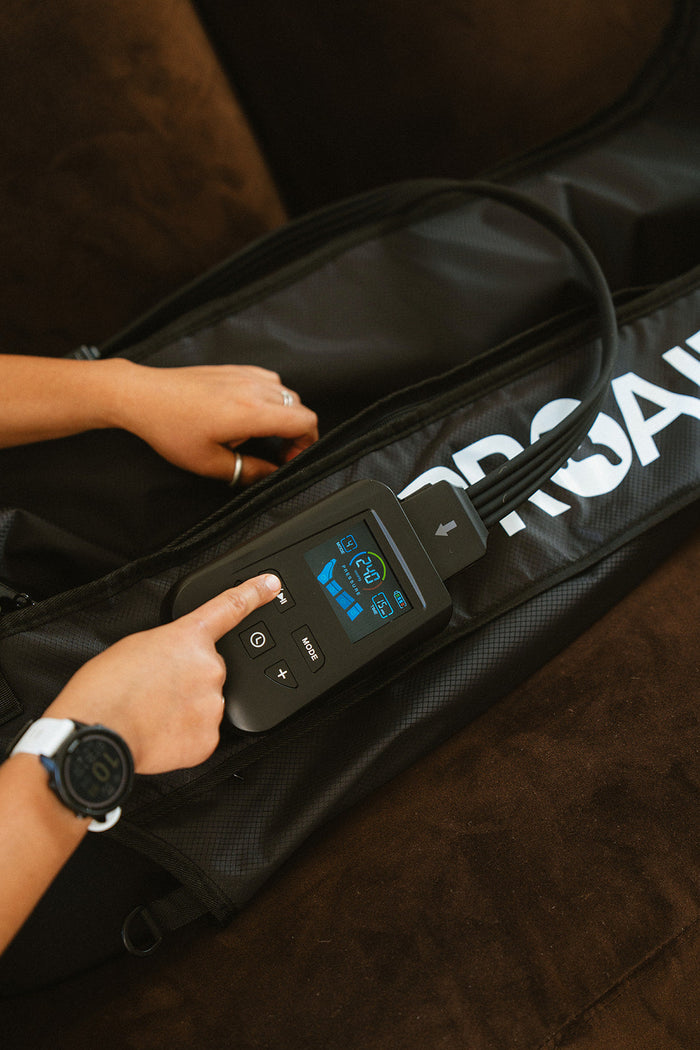
- PROAir: choose 15, 30 or 45 minutes. 30 minutes is my default.
- PROPulse: set anywhere from 10 to 90 minutes. 20 to 30 minutes is my default, and longer sessions suit a big race or a heavy week.
For how many sessions a week, see How Often Should You Use Compression Boots?
How many chambers do you need, and when should you switch some off?
More chambers give a smoother, more even squeeze from foot to thigh. Four overlapping chambers cover the whole leg well. Six chambers give you finer control over where the pressure goes.
- Keep all chambers on after running, team sport, a long ride or a long day on your feet. That is whole-leg recovery, and it is how the research used boots.
- Switch chambers off to focus on one area. On PROPulse, any of the six chambers can be turned off. Switch off the thigh chambers to concentrate on calves and lower legs after a hilly run. Switch off a chamber over a sore spot so the boots skip it.
The wave pattern matters less than people think. In the 2022 study, sequential compression and a uniform squeeze both improved ankle range of motion, with no clear winner between them (Yanaoka et al., 2022).
What is the best setting for your first session?
- Sit or lie back with your legs supported and roughly level.
- Zip the boots up fully so the chambers sit flat against your legs.
- Choose the lowest or second lowest pressure.
- Set 20 to 30 minutes and let the timer end the session.
- Next session, go up one setting. Stop when it feels firm but comfortable.
If anything tingles, goes numb or hurts, turn the pressure down or stop. Our printable compression boots quick start card has these steps on one page.
How should settings change after a race, a heavy block or a long day?
| Situation | Pressure | Time | Chambers |
|---|---|---|---|
| After a hard session | Your usual firm setting | 20 to 30 minutes | All on |
| After a race or big event | Start a setting lower, build up | 30 minutes, then daily if it helps | All on |
| Heavy training block | Your usual setting | 20 to 30 minutes, daily is reasonable | All on |
| Calves feel worst | Your usual setting | 20 minutes | Lower leg chambers only (PROPulse) |
| Long day on your feet | Moderate | 15 to 30 minutes in the evening | All on |
| Race week | Only settings you already know | Your usual time | All on |
Daily use is well supported. Competitive handball players who used boots every day for five weeks reported better recovery than a control group (Nuell et al., 2025).
How do PROAir and PROPulse settings compare?
| Setting | PROAir Wireless | PROPulse |
|---|---|---|
| Pressure | 30 to 240 mmHg in 7 settings (30, 50, 80, 120, 160, 200, 240) | 30 to 260 mmHg in 5 mmHg steps |
| Session time | 15, 30 or 45 minutes | 10 to 90 minutes |
| Chambers | 4 overlapping chambers | 6 chambers, any can be switched off |
| Power | Fully wireless. Charge between sessions, about 3.9 hours to full | Runs plugged in |
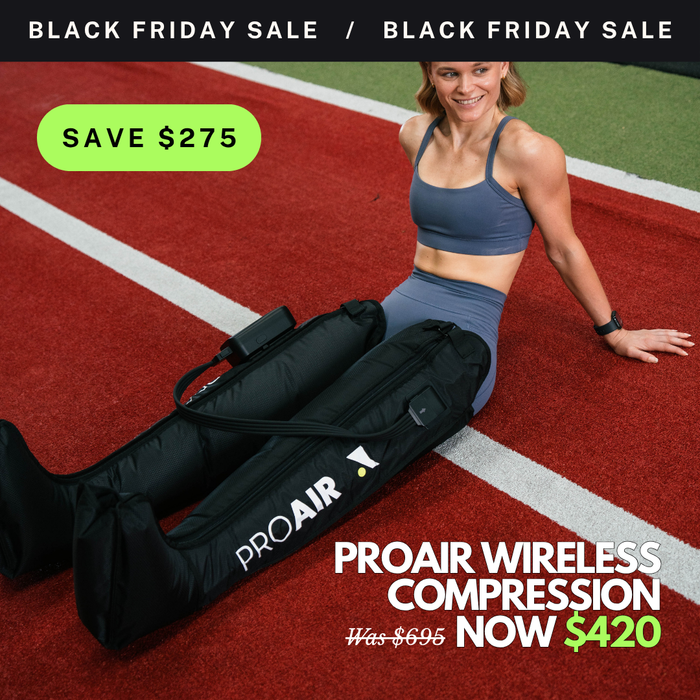
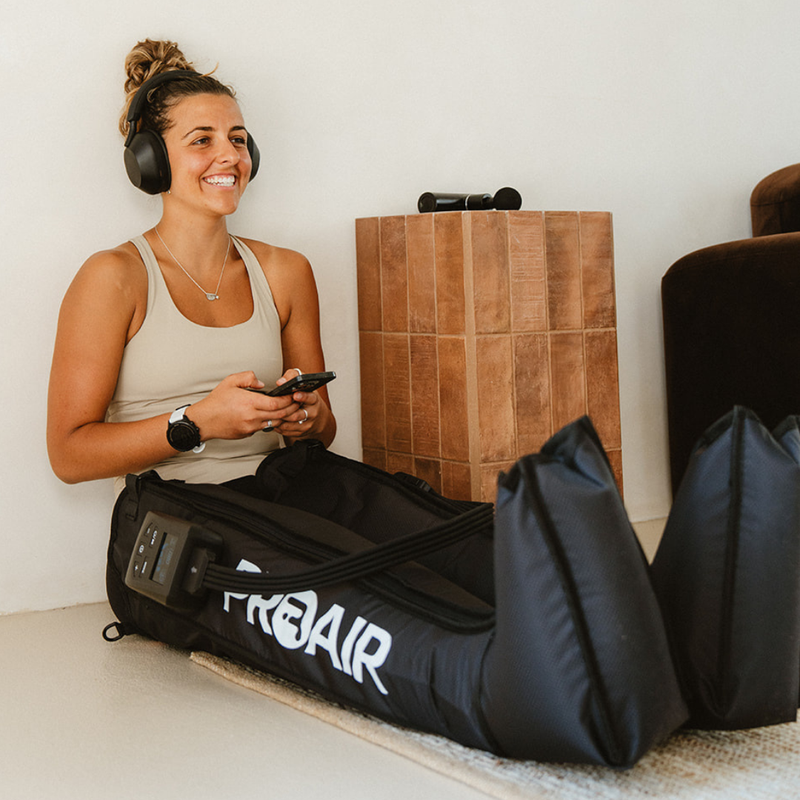
- Want simple and wireless? PROAir Wireless. Mid level, fully wireless, with built-in pump and controls and a memory function for your favourite settings. Pick a setting, pick a time, done.
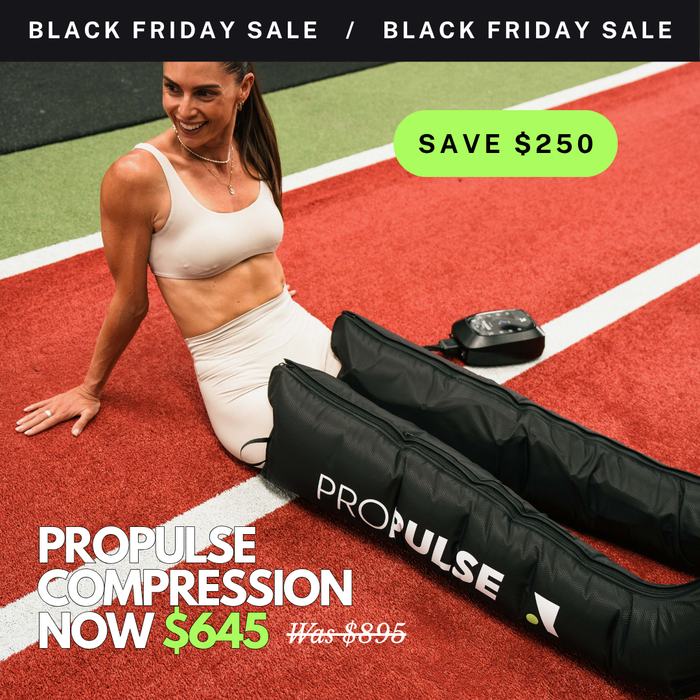
- Want full control? PROPulse. Pro level, with 5 mmHg steps and chambers you can switch off.
- Want hips and glutes too? The Lower Body Compression System covers the whole lower body.
Still deciding? Try the boot finder quiz or read Which Compression Boots Are Right for You?
Frequently asked questions
Is a higher pressure better?
Not always. Higher pressure raises blood flow more during the session (Maia et al., 2024, IJSPP), but it gave no extra flexibility benefit in a head to head study (Yanaoka et al., 2022). Choose the firmest setting that still feels relaxing.
Should compression boots hurt?
No. They should feel firm, like a strong massage. If anything tingles, goes numb or hurts, turn the pressure down or stop.
Can I use 240 mmHg straight away?
I wouldn't. Start low and work up over several sessions so you know how your legs respond. Most of the research used about 80 mmHg (Maia et al., 2024, Biol Sport).
Is a longer session better?
Not necessarily. Studies ran from 15 to 60 minutes, and the meta-analysis authors suggest 20 to 30 minutes may be enough (Maia et al., 2024, Biol Sport). Use longer sessions when you have the time and enjoy them.
Will higher settings make me faster in my next session?
Boots are built for recovery, so expect legs that feel fresher. In trained cyclists, 30 minutes of boots between efforts didn't change a 4 minute time trial compared with passive recovery (Overmayer and Driller, 2018).
Can I use compression boots with an injury?
Boots are a recovery tool, not an injury treatment. We're not medical doctors, so get any persistent pain checked by your GP or a physio before using them on an injured area.
See also Compression Boots for Runners, Compression Boots: The Complete Australian Guide and Compression Boots vs Massage Gun vs Foam Roller.
References
- Maia F, Nakamura FY, Sarmento H, Marcelino R, Ribeiro J. Effects of lower-limb intermittent pneumatic compression on sports recovery: a systematic review and meta-analysis. Biol Sport. 2024;41(4):263-275. doi:10.5114/biolsport.2024.133665
- Maia F, Machado MVB, Silva G, Nakamura FY, Ribeiro J. Hemodynamic effects of intermittent pneumatic compression on athletes: a double-blinded randomized crossover study. Int J Sports Physiol Perform. 2024;19(9):932-938. doi:10.1123/ijspp.2024-0017
- Yanaoka T, Numata U, Nagano K, Kurosaka S, Kawashima H. Effects of different intermittent pneumatic compression stimuli on ankle dorsiflexion range of motion. Front Physiol. 2022;13:1054806. doi:10.3389/fphys.2022.1054806
- Hoffman MD, Badowski N, Chin J, Stuempfle KJ. A randomized controlled trial of massage and pneumatic compression for ultramarathon recovery. J Orthop Sports Phys Ther. 2016;46(5):320-326. doi:10.2519/jospt.2016.6455
- Nuell S, Rabassa J, Bárcena C, Espar J, Munné C, García I. Effects of daily use of intermittent pneumatic compression in competitive handball players: a randomized controlled trial. Biol Sport. 2025;42(4):311-321. doi:10.5114/biolsport.2025.151656
- Overmayer RG, Driller MW. Pneumatic compression fails to improve performance recovery in trained cyclists. Int J Sports Physiol Perform. 2018;13(4):490-495. doi:10.1123/ijspp.2017-0207

About the author. Dr Peter Fowler holds a PhD in sport science (Charles Sturt University), where he researched sleep and recovery in athletes, and an MSc in exercise physiology (Loughborough University). He is an ESSA Accredited Sports Scientist (Level 2). He has spent more than 15 years in high-performance sport and athlete recovery, including roles at the Australian Institute of Sport, Tottenham Hotspur and Aspetar in Qatar. He co-founded The Recovery Project with Amanda Fowler. Read Dr Fowler's full background.