Compression Boots vs Massage Gun vs Foam Roller: Which Should You Use?
 Dr Peter Fowler, PhDSport scientist and co-founder

In this guide
The short answer all three help, in different ways. A foam roller is a great warm-up tool, a massage gun is quick for one tight muscle, and compression boots are the easy choice for whole-leg recovery after a hard day, because they cover both legs at once while you sit back and rest. Use the roller or gun before training and the boots after.
What does each recovery tool actually do?
They look like they do the same job. They don't. Each one puts pressure on muscle in a different way.
- Foam roller. You lean your body weight onto a firm roller and roll it along a muscle. You control the pressure and the spot, and it takes effort.
- Massage gun. A handheld device that taps rapidly into one muscle at a time. It is also called percussive therapy. You hold it and move it around.
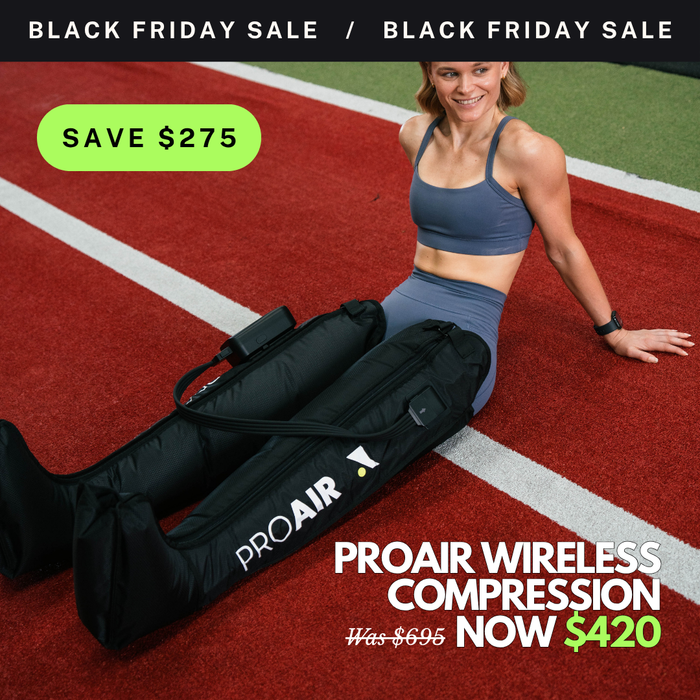
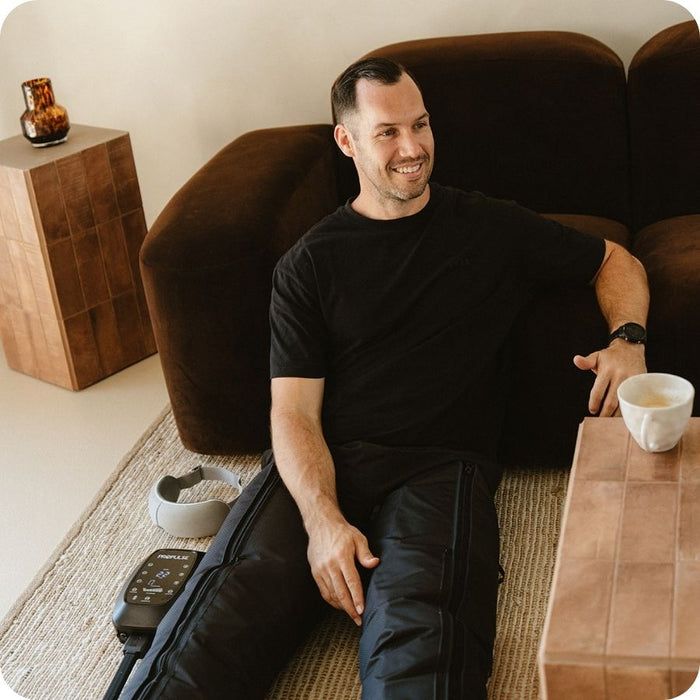
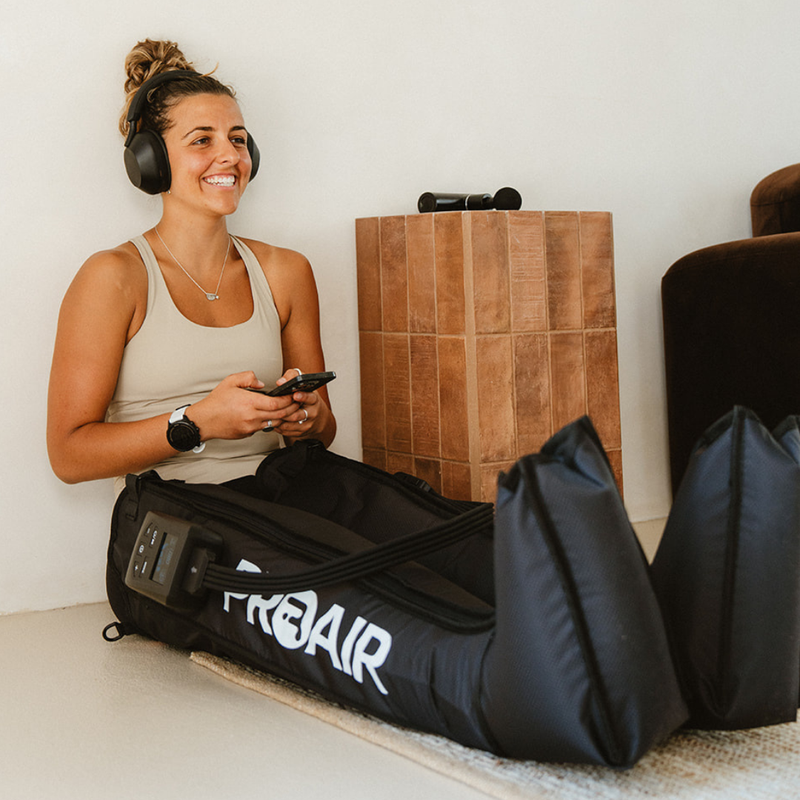
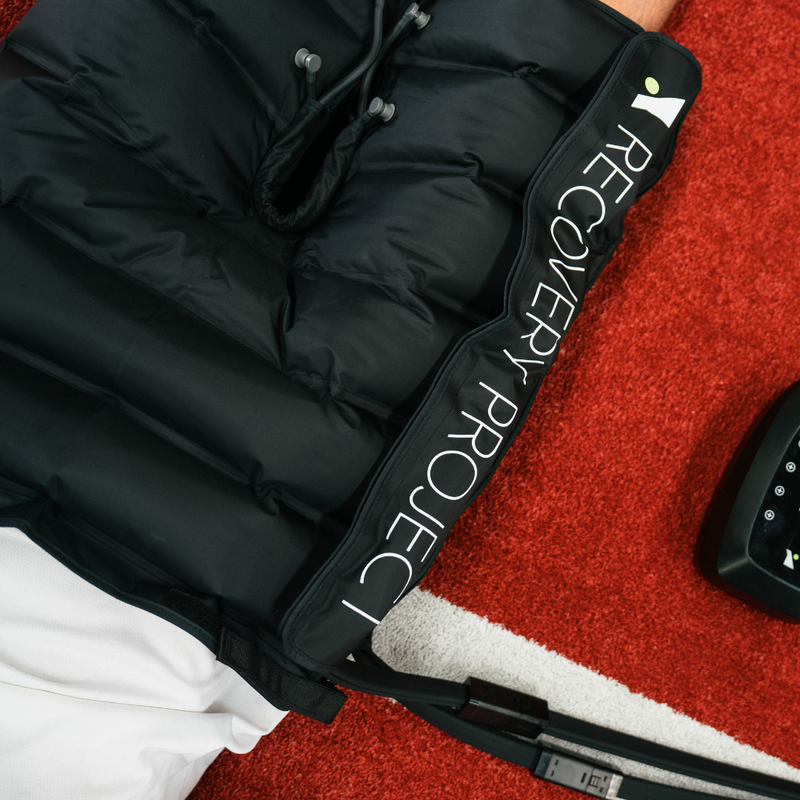
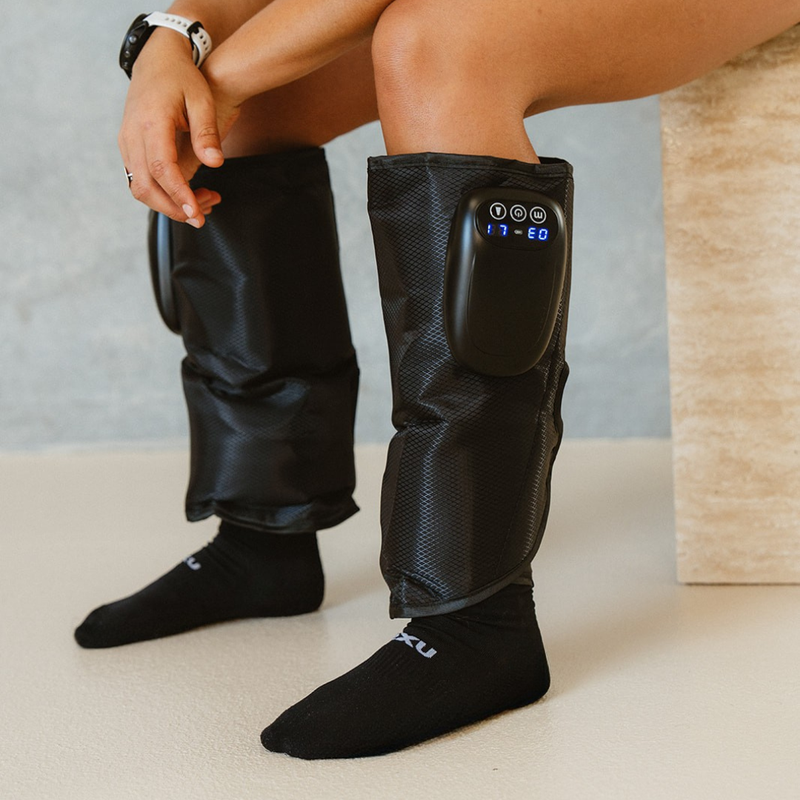
- Compression boots. Air chambers wrap your legs and inflate in sequence from the foot towards the hip, then release. This is intermittent pneumatic compression. You lie back and let them work.
My reading: rollers and guns are tools you use on a muscle. Boots are a session you sit in. That difference decides when each one fits.
What does the research say about foam rolling?
Foam rolling has small but real benefits, and it shines as a warm-up.
- Before exercise. A 2019 meta-analysis of 21 studies found rolling before exercise gave a small boost in sprint performance (0.7%) and flexibility (4.0%), with no meaningful effect on jump or strength (Wiewelhove et al., 2019).
- After exercise. Rolling after exercise reduced muscle pain by about 6% and slightly lessened the drop in sprint and strength performance (Wiewelhove et al., 2019).
- The authors' verdict. The evidence justifies foam rolling as a warm-up activity more than as a recovery tool (Wiewelhove et al., 2019).
What does the research say about massage guns?
Massage guns are newer, and the research is still catching up. A 2023 systematic review of 11 studies found:
- Range of motion. Short-term gains in flexibility for the hamstrings, calves, hip flexors and shoulders (Sampaio et al., 2023).
- Recovery. Short-term reductions in muscle stiffness after fatiguing exercise (Sampaio et al., 2023).
- Typical use. About 2 minutes per muscle group and about 5 minutes in total (Sampaio et al., 2023).
- Timing. The authors don't recommend using them right before explosive or strength work (Sampaio et al., 2023).
My reading: a massage gun is a handy, targeted tool for a tight calf or hamstring. It is quick, it travels well, and it works one spot at a time.
What does the research say about compression boots?
Compression boots have the most consistent results for how your legs feel after hard work.
- Less fatigue. After the 161 km Western States Endurance Run, 72 finishers had 20 minutes of boots, massage or lying down. Both boots and massage lowered fatigue straight after treatment compared with lying down (Hoffman et al., 2016).
- Less soreness. A 2024 meta-analysis of 17 studies found a trivial to moderate effect on pain and soreness, and a small benefit to muscle function (Maia et al., 2024, Biol Sport).
- More blood flow. Leg blood flow rose during sessions at 80 and 200 mmHg in 22 athletes, more so at higher pressure (Maia et al., 2024, IJSPP).
Massage itself is one of the best ranked recovery methods. A meta-analysis of 107 studies found massage was the most effective technique for reducing soreness and perceived fatigue (Dupuy et al., 2018). Boots give you a firm, massage-like squeeze over both legs, at home, whenever you need it.
How do they compare side by side?
| Foam roller | Massage gun | Compression boots | |
|---|---|---|---|
| Best for | Warm-ups and flexibility | One tight muscle, fast | Whole-leg recovery after hard days |
| Coverage | One muscle at a time | One spot at a time | Both legs, foot to thigh, at once |
| Effort | Active, uses your body weight | Active, you hold and move it | Hands-free, you lie back |
| Typical time | 5 to 10 minutes | About 5 minutes | 20 to 30 minutes |
| Main research finding | Small gains in sprint and flexibility before exercise, less pain after | Short-term gains in range of motion, less stiffness | Less fatigue straight after, less soreness, more blood flow |
| When I'd use it | Before training | Before training or on a niggly spot | After training or a long day |
Which is best for recovery after a hard day?
Compression boots. When your whole lower body feels heavy, you want something that covers everything and asks nothing of you. That is what boots do.
- They cover both legs at once. Calves, shins, quads and hamstrings in one session, instead of working through each muscle.
- They take zero effort. After a long run, a match or a double shift on your feet, rolling on the floor is the last thing you want to do.
- They run on a timer. Set 20 to 30 minutes, then read, watch TV or eat dinner. The session ends on its own.
- They match the research. Less fatigue straight after a session is the most consistent finding in the boots research (Hoffman et al., 2016; Maia et al., 2024, Biol Sport).
For the right pressure and time, see Compression Boot Settings Explained.
How do you combine boots, a massage gun and a foam roller?
They work best as a team. Here is how I'd set up a normal training day.
- Before training: 5 minutes of foam rolling on the muscles you're about to use, or a quick pass with the massage gun on anything tight.
- After training: refuel and rehydrate first. Then 20 to 30 minutes in compression boots.
- The next morning: a few minutes of rolling or mobility if anything still feels stiff.
- Every night: protect your sleep. It is still the biggest recovery tool you have. Read The Importance of Sleep.
Want a simple way to track it all? The Recovery Points calculator scores your recovery habits each day.
Which recovery tool should you buy first?
If your legs carry most of your training load, start with compression boots. Running, cycling, team sport, hiking and long days on your feet all land in the legs. Boots cover that in one hands-free session.
- Simple and wireless: PROAir Wireless. Mid level, fully wireless, 30 to 240 mmHg in 7 settings.
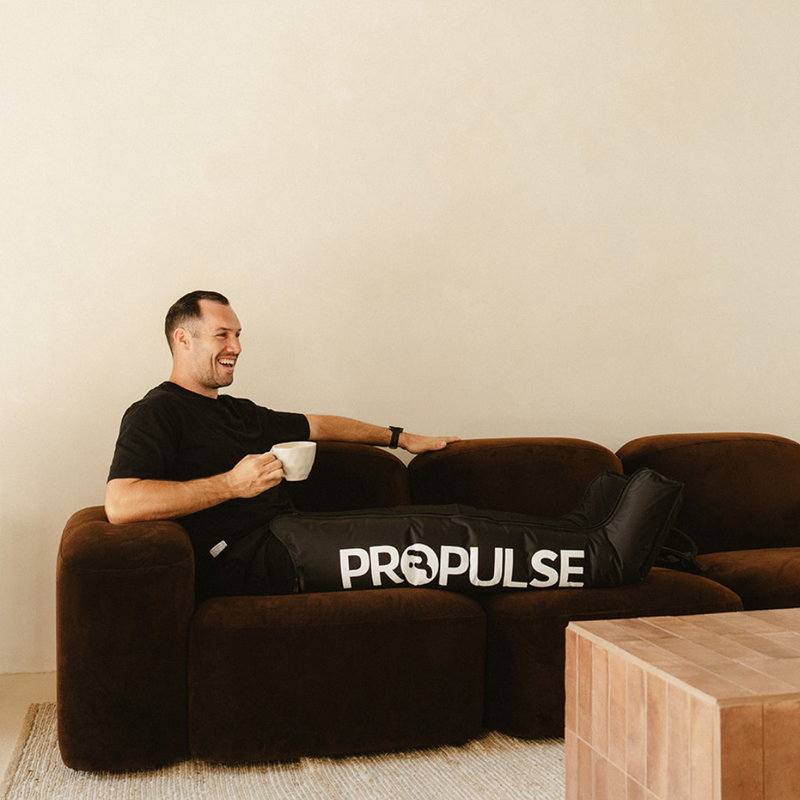
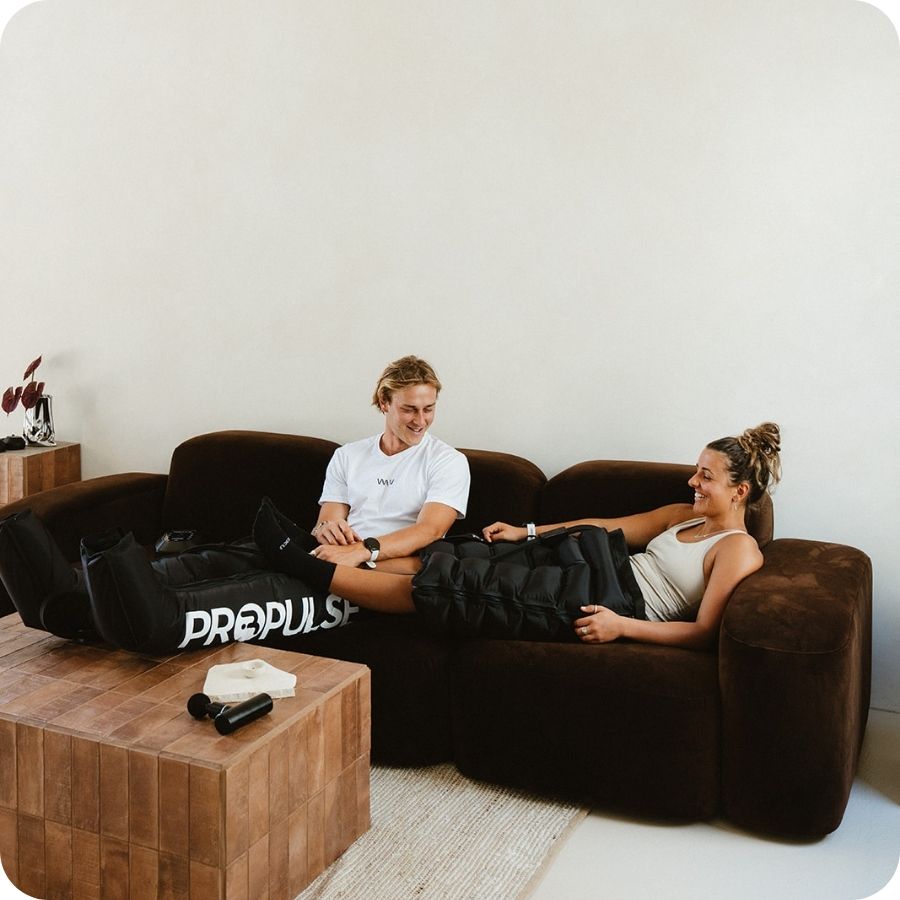
- Full control: PROPulse. Pro level, 30 to 260 mmHg in 5 mmHg steps, and any of the 6 chambers can be switched off.
- Calves or arms: PROLite. Entry level, 3 modes and 3 intensity levels.
A foam roller is a cheap, smart add-on for warm-ups. Add a massage gun later if you like targeted work on one spot. Not sure which boots suit you? Try the boot finder quiz.
Frequently asked questions
Are compression boots better than a massage gun?
For whole-leg recovery after hard days, yes. Boots cover both legs at once, hands-free, and reduce fatigue straight after a session (Hoffman et al., 2016). A massage gun is better for a quick hit on one tight muscle.
Is foam rolling enough on its own?
It is a great start, especially before training (Wiewelhove et al., 2019). After a big day, most people find boots easier, because they need no effort and cover more muscle.
Can I use a massage gun and compression boots on the same day?
Yes. Use the massage gun before training on tight spots, then boots afterwards for your whole legs.
Which is best for runners?
Boots, for after long runs and races. That is where the fatigue research is strongest. See Compression Boots for Runners.
Should I use any of these on an injury?
These are recovery tools, not injury treatments. We're not medical doctors, so get any persistent pain checked by your GP or a physio first.
See also Do Compression Boots Actually Work?, How Often Should You Use Compression Boots? and What is Recovery?
References
- Wiewelhove T, Döweling A, Schneider C, Hottenrott L, Meyer T, Kellmann M, Pfeiffer M, Ferrauti A. A meta-analysis of the effects of foam rolling on performance and recovery. Front Physiol. 2019;10:376. doi:10.3389/fphys.2019.00376
- Sampaio AR, Ferreira RM, Silva R, Vigário P, Martins PN, Casanova F, Fernandes RJ. The effects of massage guns on performance and recovery: a systematic review. J Funct Morphol Kinesiol. 2023;8(3):138. doi:10.3390/jfmk8030138
- Hoffman MD, Badowski N, Chin J, Stuempfle KJ. A randomized controlled trial of massage and pneumatic compression for ultramarathon recovery. J Orthop Sports Phys Ther. 2016;46(5):320-326. doi:10.2519/jospt.2016.6455
- Maia F, Nakamura FY, Sarmento H, Marcelino R, Ribeiro J. Effects of lower-limb intermittent pneumatic compression on sports recovery: a systematic review and meta-analysis. Biol Sport. 2024;41(4):263-275. doi:10.5114/biolsport.2024.133665
- Maia F, Machado MVB, Silva G, Nakamura FY, Ribeiro J. Hemodynamic effects of intermittent pneumatic compression on athletes: a double-blinded randomized crossover study. Int J Sports Physiol Perform. 2024;19(9):932-938. doi:10.1123/ijspp.2024-0017
- Dupuy O, Douzi W, Theurot D, Bosquet L, Dugué B. An evidence-based approach for choosing post-exercise recovery techniques to reduce markers of muscle damage, soreness, fatigue, and inflammation: a systematic review with meta-analysis. Front Physiol. 2018;9:403. doi:10.3389/fphys.2018.00403

About the author. Dr Peter Fowler holds a PhD in sport science (Charles Sturt University), where he researched sleep and recovery in athletes, and an MSc in exercise physiology (Loughborough University). He is an ESSA Accredited Sports Scientist (Level 2). He has spent more than 15 years in high-performance sport and athlete recovery, including roles at the Australian Institute of Sport, Tottenham Hotspur and Aspetar in Qatar. He co-founded The Recovery Project with Amanda Fowler. Read Dr Fowler's full background.