
By Dr Peter Fowler, PhD (Sport Science). Updated 13 October 2026.
The short answer: compression boots can help runners' legs feel less fatigued after long runs and races, mostly in the hours straight afterwards. Studies in runners haven't found that boots make you faster in the days that follow, or that they speed up muscle repair. Use them for 20 to 30 minutes after your hardest sessions, as an extra on top of sleep, food and smart training, not instead of them.
What does the research say about compression boots for runners?
Several studies have tested boots in runners, and the results are consistent:
- Ultramarathon. 72 finishers of the 161 km Western States Endurance Run were randomised to 20 minutes of boots, massage or lying down after the race. Boots lowered overall muscular fatigue scores straight after treatment. From day 1 to day 7 there were no differences, and 400 m run times weren't better (Hoffman et al., 2016).
- Daily treatment after an ultra. A follow-up gave 56 ultramarathoners boots daily for four days after the race. Fatigue was lower straight after each treatment. Daily soreness and 400 m times weren't improved (Heapy et al., 2018).
- Long training runs. Ten distance runners completed two 20-mile runs, once followed by daily boot sessions and once with none. Pain ratings and an inflammation marker (CRP) were no different (Draper et al., 2020).
- Interval training. Endurance-trained men did three straight days of high-intensity intervals, with boots or a sham treatment. Their 6 km time trial performance afterwards didn't differ between groups (Haun et al., 2017).
- Refuelling. After 90 minutes of intermittent shuttle running, an hour of boots didn't speed up muscle glycogen recovery (Kim et al., 2021).
Across all sports, a 2024 meta-analysis of 17 studies found trivial to moderate benefits for soreness and trivial to small benefits for muscle function (Maia et al., 2024). My reading: boots are a comfort and feel-good tool for runners, backed by modest evidence. They're not a performance enhancer.
When should runners use compression boots?
This is my practical guidance, built on the studies above. No study has tested every one of these situations directly.
| Session | Use boots? | How |
|---|---|---|
| Long run | Yes, if your legs feel heavy | 20 to 30 minutes later that day, after you've eaten and rehydrated |
| Intervals or a hard tempo | Optional | One session that evening if you have another hard day soon |
| Easy run or recovery day | Not needed | Use them only if you enjoy it |
| Heavy training block | Reasonable daily | Daily use has been studied in athletes over five weeks (Nuell et al., 2025) |
| Race week | Only if it's already your routine | Same settings you know. Don't try a new, much higher pressure |
| After a marathon or ultra | Yes, for comfort | A session that day, then daily for a few days if it helps. Expect less fatigue, not faster recovery of speed |
| Travelling to a race | Optional | A session once you arrive, if your legs feel heavy. Sleep and moving around matter more |
What pressure and how long?
- Session length: 20 to 30 minutes. That's what most studies used (Maia et al., 2024).
- Pressure: start low and build to a firm but comfortable squeeze. Around 80 mmHg is the most common research setting. Higher pressure hasn't been shown to work better.
- Position: lie back with your legs supported and roughly level.
- Stop if anything tingles, goes numb or hurts.
More detail in How Often Should You Use Compression Boots?
Where compression boots fit in a runner's recovery
Most of a runner's recovery comes from the basics: enough sleep, enough carbohydrate and protein, and a training load that builds sensibly. A 2023 review ranked recovery boots below foam rolling, compression garments, cryotherapy and active recovery on strength of evidence (Driller & Leabeater, 2023). Boots are worth having if you'll use them, but they come after the basics, not before.
Compression socks deserve a mention. Garments have a stronger evidence base for recovery than boots, according to the same review, and they cost far less. For many runners, a good pair of socks or tights is the place to start. Add boots if you want more.
Which compression boots suit runners?
Disclosure: I co-own The Recovery Project, which makes the boots below. Other options are compared in Best Compression Boots Australia 2026.
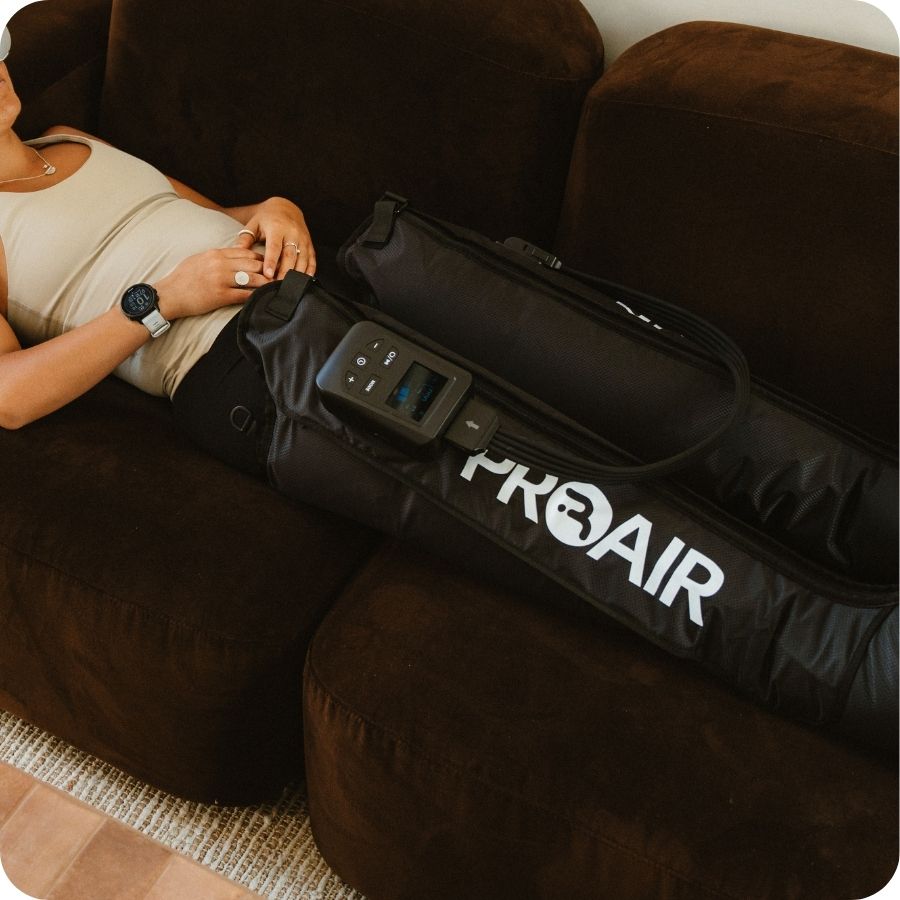
- You travel to races or train in different places: PROAir Wireless ($495). No hoses, quick to set up. Charge it between sessions, as it can't run while plugged in.
- You mostly recover at home and want control: PROPulse ($695). You can switch individual chambers off, for example to focus on calves and lower legs after a hilly run, and adjust pressure in 5 mmHg steps.
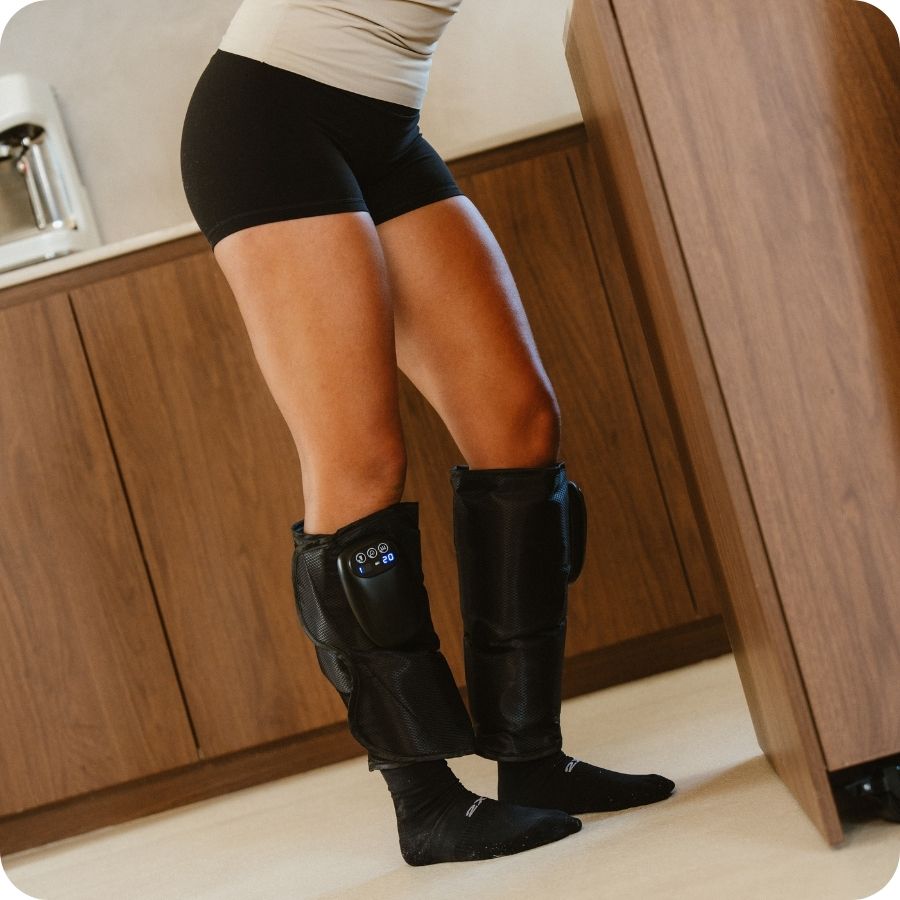
- It's mostly your calves: PROLite ($350). Small calf sleeves for travel or a race bag.
Regular prices shown. All three were on sale on 13 October 2026.
Who should check with a doctor first?
Clinical guidelines note there are conditions where pneumatic compression should not be used or needs care (Schwahn-Schreiber et al., 2018). Speak to your doctor first if you have a known or suspected blood clot, a circulation, heart or kidney condition, an acute injury such as a suspected stress fracture or muscle tear, open wounds on your legs, or if you're pregnant.
Frequently asked questions
Are compression boots good for runners?
They can make legs feel less fatigued after long runs and races. They don't reliably make you faster in the following days.
Should I use compression boots after a marathon?
Yes, if you enjoy them. In ultramarathon runners, a 20-minute session reduced fatigue straight afterwards, without lasting effects (Hoffman et al., 2016).
Do compression boots help with shin splints or injuries?
There's no good evidence that boots treat or prevent running injuries. Get a persistent pain assessed by a physio or doctor.
Can I use compression boots every day while training?
Daily use has been studied in athletes over five weeks (Nuell et al., 2025). Once a day after your harder sessions is plenty.
Compression boots or compression socks for runners?
Socks have stronger evidence and cost less. Boots can make your legs feel better after big efforts. You can use both.
See also Do Compression Boots Actually Work? and Compression Boots: The Complete Australian Guide.
References
- Hoffman MD, Badowski N, Chin J, Stuempfle KJ. A randomized controlled trial of massage and pneumatic compression for ultramarathon recovery. J Orthop Sports Phys Ther. 2016;46:320-326. doi:10.2519/jospt.2016.6455
- Heapy AM, Hoffman MD, Verhagen HH, et al. A randomized controlled trial of manual therapy and pneumatic compression for recovery from prolonged running: an extended study. Res Sports Med. 2018;26:354-364. doi:10.1080/15438627.2018.1447469
- Draper SN, Kullman EL, Sparks KE, Little K, Thoman J. Effects of intermittent pneumatic compression on delayed onset muscle soreness (DOMS) in long distance runners. Int J Exerc Sci. 2020;13:75-86. PubMed 32148616
- Haun CT, Roberts MD, Romero MA, et al. Concomitant external pneumatic compression treatment with consecutive days of high intensity interval training reduces markers of proteolysis. Eur J Appl Physiol. 2017;117:2587-2600. doi:10.1007/s00421-017-3746-2
- Kim K, Kargl CK, Ro B, et al. Neither peristaltic pulse dynamic compressions nor heat therapy accelerate glycogen resynthesis after intermittent running. Med Sci Sports Exerc. 2021;53:2425-2435. doi:10.1249/MSS.0000000000002713
- Maia F, Nakamura FY, Sarmento H, Marcelino R, Ribeiro J. Effects of lower-limb intermittent pneumatic compression on sports recovery: a systematic review and meta-analysis. Biol Sport. 2024;41:263-275. doi:10.5114/biolsport.2024.133665
- Nuell S, Rabassa J, Bárcena C, Espar J, Munné C, García I. Effects of daily use of intermittent pneumatic compression in competitive handball players: a randomized controlled trial. Biol Sport. 2025;42:311-321. doi:10.5114/biolsport.2025.151656
- Driller M, Leabeater A. Fundamentals or icing on top of the cake? A narrative review of recovery strategies and devices for athletes. Sports (Basel). 2023;11:213. doi:10.3390/sports11110213
- Schwahn-Schreiber C, Breu FX, Rabe E, et al. S1 guideline on intermittent pneumatic compression (IPC). Hautarzt. 2018;69:662-673. doi:10.1007/s00105-018-4219-1
About the author. Dr Peter Fowler holds a PhD in sport science (Charles Sturt University), where he researched sleep and recovery in athletes, and an MSc in exercise physiology (Loughborough University). He is an ESSA Accredited Sports Scientist (Level 2). He has spent more than 15 years in high-performance sport and athlete recovery, including roles at the Australian Institute of Sport, Tottenham Hotspur and Aspetar in Qatar. He co-owns The Recovery Project. Read Dr Fowler's full background.

Leave a comment
All comments are moderated before being published.
This site is protected by hCaptcha and the hCaptcha Privacy Policy and Terms of Service apply.