The Pre-Sleep Routine for Athletes: A Sleep Scientist's 60 Minute Wind-Down
 Dr Peter Fowler, PhDSport scientist and co-founder

In this guide
The short answer start winding down 30 to 60 minutes before bed. Set a reminder, dim the lights, switch your phone off and leave it out of the bedroom, then do something relaxing like a warm shower, a book or slow breathing. Keep caffeine early, keep the bedroom cool and dark, and keep the same routine every night.
Why do athletes need a pre-sleep routine?
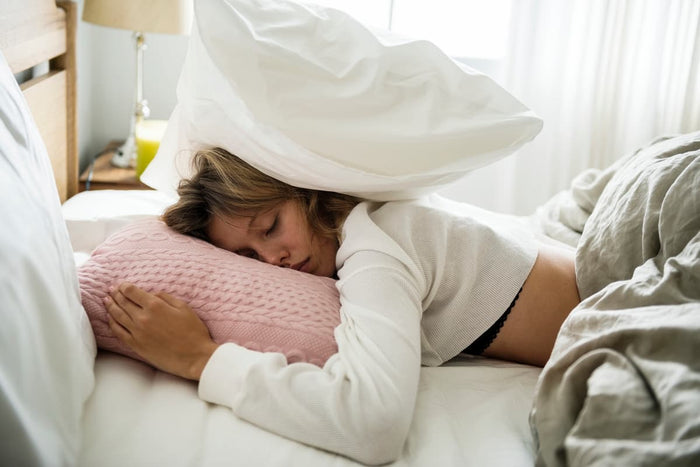
Sleep is the foundation of recovery. It is also what I studied for my PhD, working with elite athletes. The pattern I saw again and again was simple. Athletes trained hard, then went straight from a busy evening to lying in bed, wide awake.
Athletes have extra reasons to struggle. The 2021 expert consensus on sleep in athletes lists training, travel and competition as sport-specific risks to sleep, alongside everyday ones like stress and anxiety (Walsh et al., 2021). Evening training, late games and adrenaline all push sleep later.
A pre-sleep routine is the bridge. It tells your brain the day is done. My reading: it is the cheapest recovery tool you will ever use, and one of the most effective.
When should your pre-sleep routine start?
30 minutes to an hour before you want to be asleep. Here is the simple version from our printable pre-sleep routine:
- Set a reminder. Put a bedtime alarm in your phone about 60 minutes before your ideal bedtime. When it goes off, the wind-down starts.
- Dim the lights. Turn off the big overhead lights and use lamps.
- Keep it regular. Aim for your bedtime and wake time to fall in the same one hour window each night.
| Time before bed | What to do | Why |
|---|---|---|
| 8 or more hours | Last coffee | Caffeine cuts sleep time, even hours later |
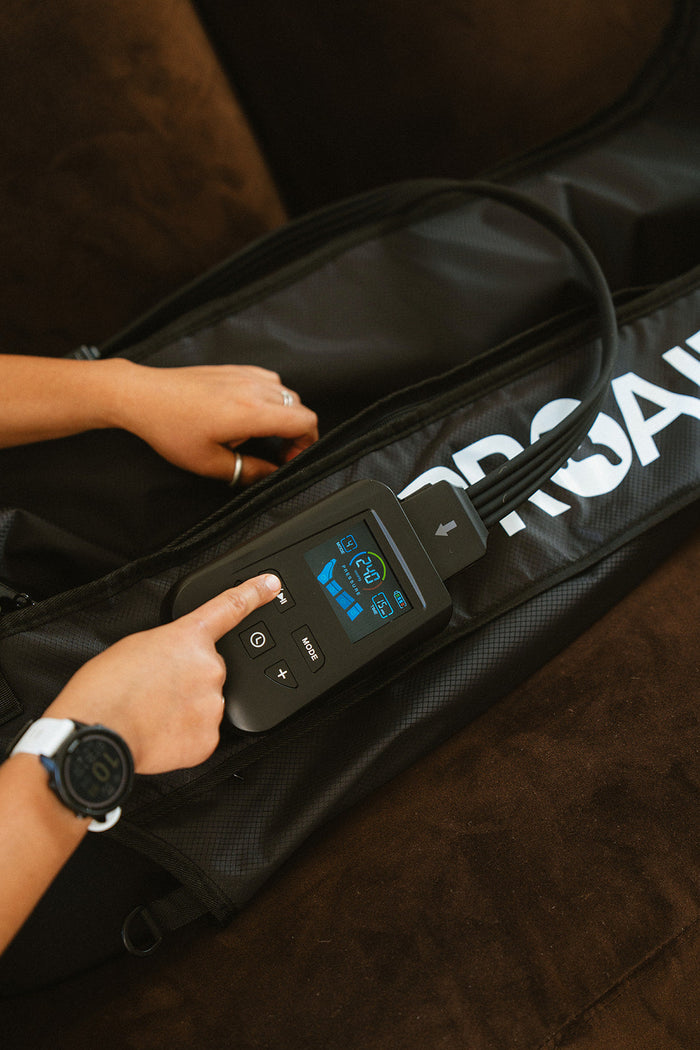
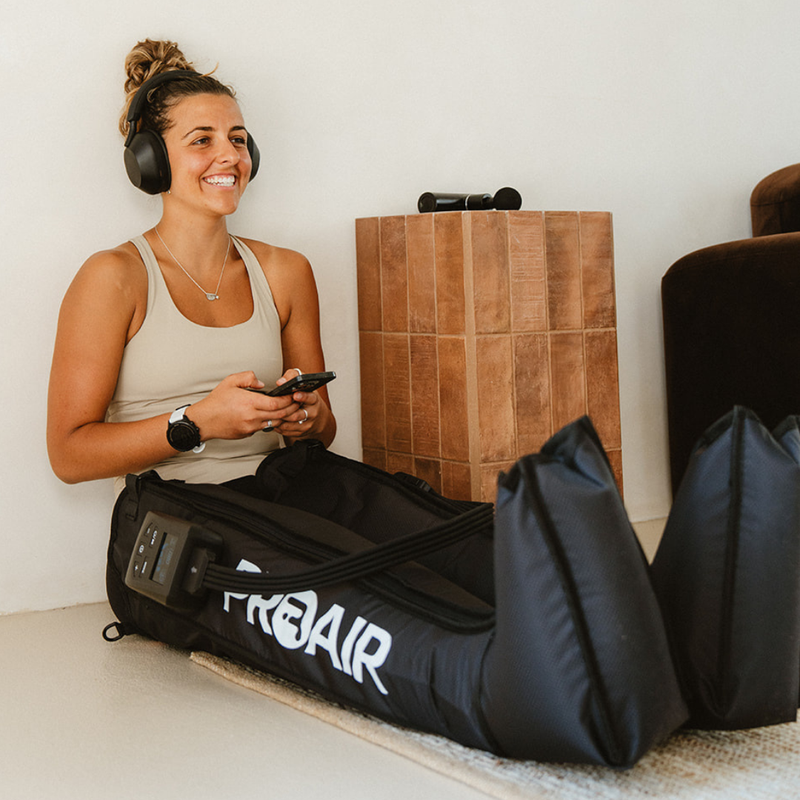
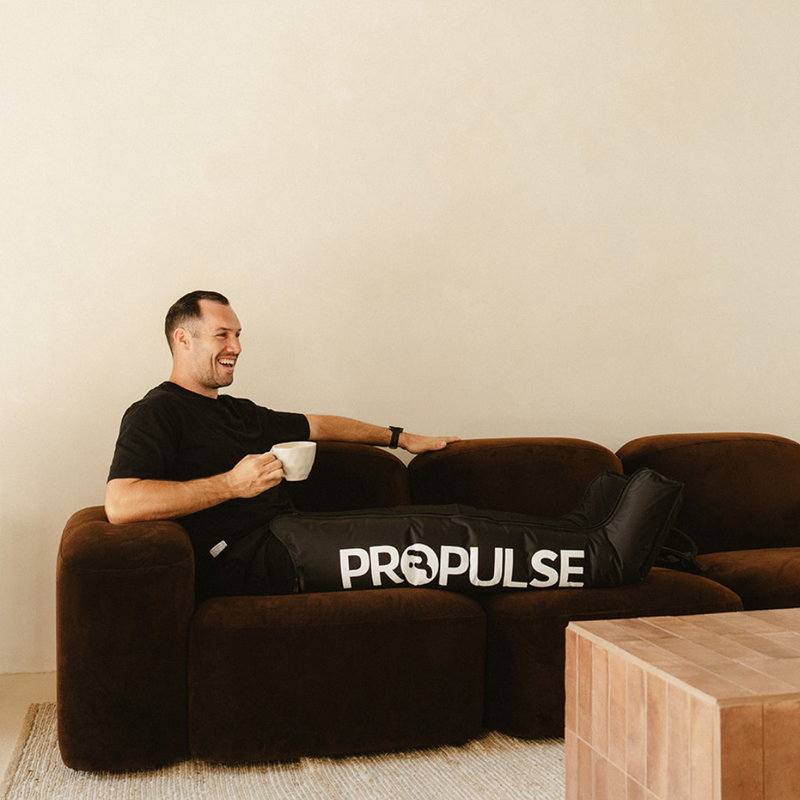
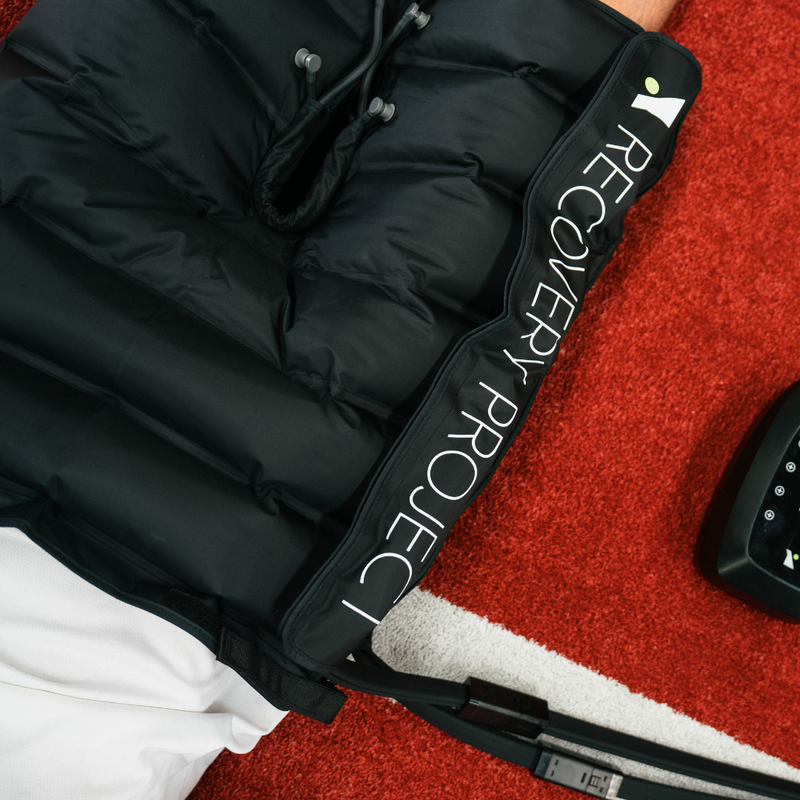
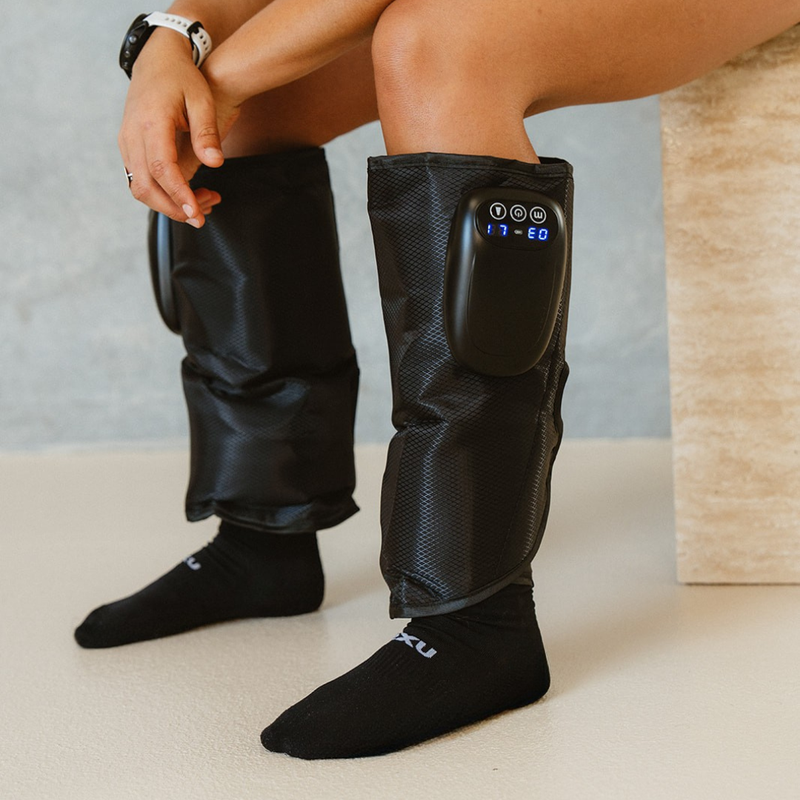
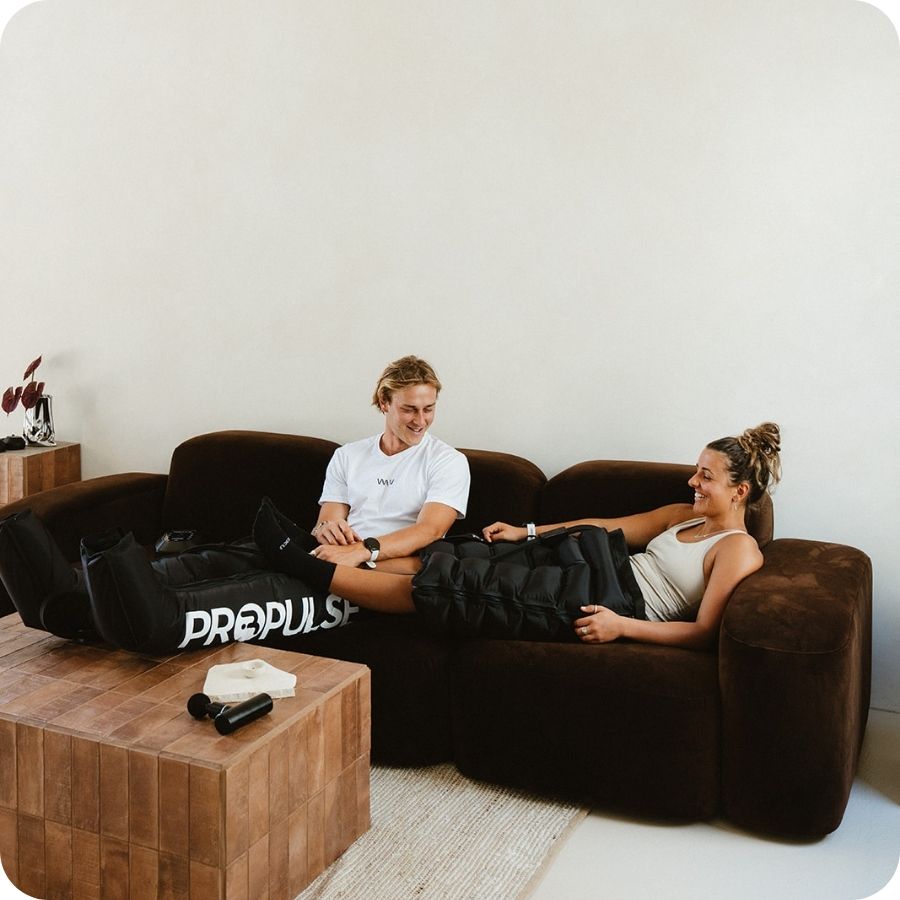
| 2 to 3 hours | Dinner done. Optional compression boots session while you relax | Heavy meals close to bed are a common sleep disruptor |
| 1 to 2 hours | Warm shower or bath | Linked with falling asleep faster |
| 60 minutes | Bedtime alarm. Dim the lights | Starts the wind-down on time |
| 30 to 45 minutes | Phone off and out of the bedroom. Write tomorrow's to-do list | Less light, fewer thoughts racing |
| 15 to 30 minutes | Read a paper book or listen to a podcast | A calm competing task |
| Lights out | A few rounds of slow breathing | Helps you settle |
This is my practical template. Shift it to suit your training times. If you're not sure whether you're a morning or evening person, take the sleep type quiz first.
What should you do with your phone before bed?
The ideal is simple. Switch devices off and leave them out of the bedroom.
Light from screens matters. In a controlled study, reading on a light-emitting e-reader before bed, compared with a printed book, meant people took longer to fall asleep, had less melatonin, had their body clock shifted later and felt less alert the next morning (Chang et al., 2015). Screens also delay bedtime simply because we lose track of time.
If you must use a device to relax, do it the smart way:
- Reduce distractions. Turn on airplane or Do Not Disturb mode.
- Reduce light. Use Night Shift or similar software, and turn the brightness right down.
- Keep it calm. Read or listen to a podcast. Avoid games and anything that winds you up.
Does a warm shower before bed help you sleep?
Yes. A 2019 meta-analysis found that a warm shower or bath of 40 to 42.5 °C, taken 1 to 2 hours before bed, was linked with better self-rated sleep quality and falling asleep faster. Even about 10 minutes helped (Haghayegh et al., 2019).
This works well for athletes who train in the evening. Shower after training, eat, then let your body cool down naturally as bedtime gets closer.
How do you switch off a racing mind?
This is the question I get most from athletes. Here are the tools I use.
- Write a to-do list. In a sleep lab study of 57 young adults, five minutes writing a specific to-do list at bedtime helped people fall asleep faster than writing about tasks already done (Scullin et al., 2018).
- Journal earlier in the day. Process the day and plan tomorrow well before bed. Some people call this cognitive unloading.
- Use a competing task. A book or podcast makes it harder to think about urgent things.
- Keep bed for sleep. No emails or scrolling in bed. Reading and podcasts are fine.
- Breathe slowly. Try box breathing: in for 4, hold for 4, out for 4, hold for 4. Or 4-7-8 breathing: in for 4, hold for 7, out for 8. Slow, controlled breathing helps switch on the calming side of your nervous system.
What about caffeine and alcohol?
Both matter more than most athletes think.
- Caffeine. A 2023 meta-analysis of 24 studies found caffeine cut total sleep time by 45 minutes and sleep efficiency by 7%. The authors suggest a standard coffee at least 8.8 hours before bed, and a typical pre-workout at least 13.2 hours before bed (Gardiner et al., 2023). That matters if you train at night with a pre-workout.
- Alcohol. It helps you fall asleep, then disrupts the second half of the night and reduces dream (REM) sleep at moderate and high doses (Ebrahim et al., 2013).
What should your bedroom be like?
Cool, dark and quiet. The expert consensus suggests removing light, technology and noise, and a room temperature of 17 to 22 °C (Walsh et al., 2021). Blackout curtains and an eye mask are worth it, especially for game nights and travel.
For more on why sleep matters so much, read The Importance of Sleep.
What if you still can't fall asleep?
- Go to bed when you're sleepy, not just tired. Yawning, heavy eyelids and nodding off are the signs.
- Keep your wake time fixed. If your wake time is consistent, your bedtime will follow.
- Keep naps short. Under 30 minutes, and skip them if you struggle to sleep at night (Walsh et al., 2021).
- Stop trying so hard. Sleep is passive. Shift your attention to something you enjoy.
Want a structured plan? Follow our 14 night sleep reset.
Frequently asked questions
How long before bed should I stop using my phone?
30 to 60 minutes. Ideally the phone stays out of the bedroom altogether.
Is Night Shift mode enough?
It helps, but it's the backup plan. Switching off is better. If you do use a device, turn the brightness right down and switch on Do Not Disturb.
How much sleep do athletes need?
Most adults need 7 to 9 hours, but the expert consensus recommends an individual approach based on how much sleep you feel you need (Walsh et al., 2021).
Should I nap if I slept badly?
A short nap is fine. Keep it under 30 minutes and in the early afternoon, and skip it if you struggle to fall asleep at night (Walsh et al., 2021).
Can compression boots be part of my evening routine?
Yes. An evening session fits well before bed. Do it before your wind-down starts, then put the controller away with your phone. PROAir Wireless is quick to set up on the couch.
What if I've tried everything and still sleep badly?
A routine builds good habits, but it isn't a diagnosis. If you regularly wake unrefreshed, talk to your GP or a sleep professional for a proper assessment. Our sleep habits check is a good place to see where you're at first.
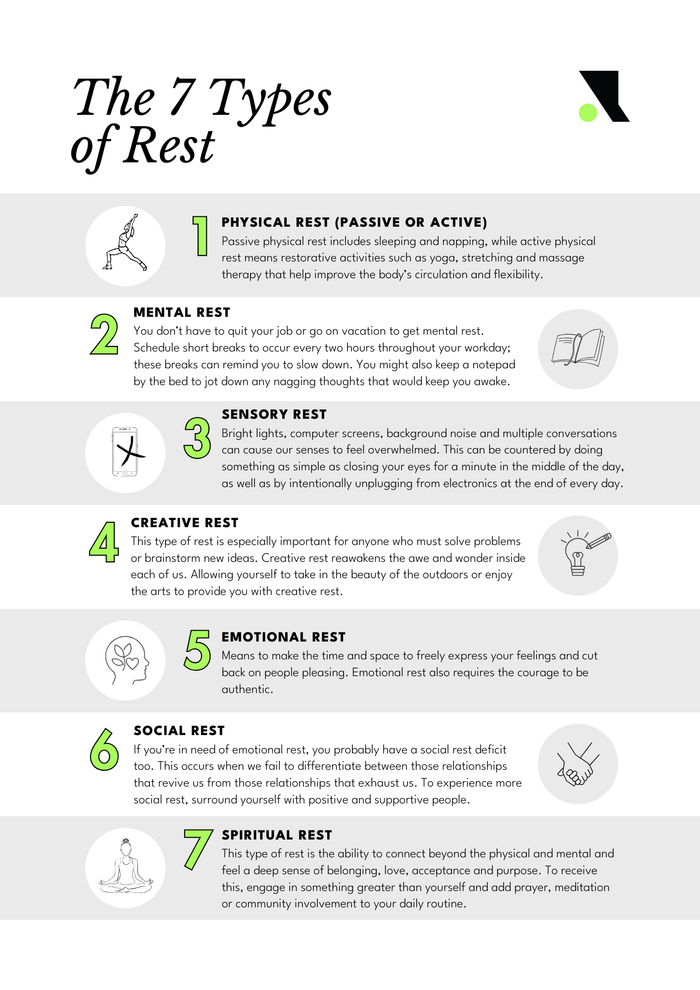
See also Your Sleep Type = Your Recovery Style, Sleep Monitoring and Elite Sport and The 7 Types of Rest.
References
- Walsh NP, Halson SL, Sargent C, Roach GD, Nédélec M, Gupta L, et al. Sleep and the athlete: narrative review and 2021 expert consensus recommendations. Br J Sports Med. 2021;55(7):356-368. doi:10.1136/bjsports-2020-102025
- Chang AM, Aeschbach D, Duffy JF, Czeisler CA. Evening use of light-emitting eReaders negatively affects sleep, circadian timing, and next-morning alertness. Proc Natl Acad Sci USA. 2015;112(4):1232-1237. doi:10.1073/pnas.1418490112
- Haghayegh S, Khoshnevis S, Smolensky MH, Diller KR, Castriotta RJ. Before-bedtime passive body heating by warm shower or bath to improve sleep: a systematic review and meta-analysis. Sleep Med Rev. 2019;46:124-135. doi:10.1016/j.smrv.2019.04.008
- Scullin MK, Krueger ML, Ballard HK, Pruett N, Bliwise DL. The effects of bedtime writing on difficulty falling asleep: a polysomnographic study comparing to-do lists and completed activity lists. J Exp Psychol Gen. 2018;147(1):139-146. doi:10.1037/xge0000374
- Gardiner C, Weakley J, Burke LM, Roach GD, Sargent C, Maniar N, Townshend A, Halson SL. The effect of caffeine on subsequent sleep: a systematic review and meta-analysis. Sleep Med Rev. 2023;69:101764. doi:10.1016/j.smrv.2023.101764
- Ebrahim IO, Shapiro CM, Williams AJ, Fenwick PB. Alcohol and sleep I: effects on normal sleep. Alcohol Clin Exp Res. 2013 (April issue). doi:10.1111/acer.12006

About the author. Dr Peter Fowler holds a PhD in sport science (Charles Sturt University), where he researched sleep and recovery in athletes, and an MSc in exercise physiology (Loughborough University). He is an ESSA Accredited Sports Scientist (Level 2). He has spent more than 15 years in high-performance sport and athlete recovery, including roles at the Australian Institute of Sport, Tottenham Hotspur and Aspetar in Qatar. He co-founded The Recovery Project with Amanda Fowler. Read Dr Fowler's full background.