Full Body Compression Suits for Recovery: Do You Need One?
 Dr Peter Fowler, PhDSport scientist and co-founder

In this guide
Written by Dr Peter Fowler and Amanda Fowler, founders of The Recovery Project. Updated 16 November 2026.
The short answer: most people don't need a full body compression suit. The sports research on air compression is almost all on the legs. Start with your legs. Add your hips and glutes if that's where you feel it. Arms are optional, and there's far less evidence for them.
What we recommend instead of a full suit
Lower Body Compression System, $995
- Two leg attachments and a hip attachment, run from one control unit, one at a time.
- 30 to 260 mmHg, 6 massage modes, custom time and zone settings.
- Runs on its battery (3+ hours) or plugged in. Free PROPack backpack included.
Free shipping. 30-day money-back guarantee. 1-year warranty. Afterpay and Zip available.
Already have PROPulse? Add PROHip, $350
Black Friday: code WELCOME25 takes $25 off your order until Sunday 6 December, 11:59pm.
What is a full body compression suit?
Two different things get called a compression suit.
- Compression garments. Tight tights, tops or one-piece suits you wear. They squeeze at a steady pressure, during exercise, after it or while travelling.
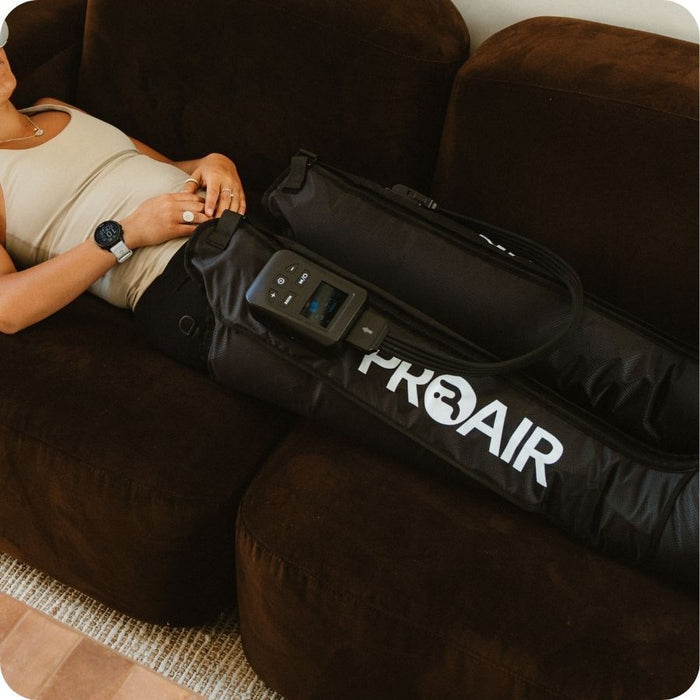
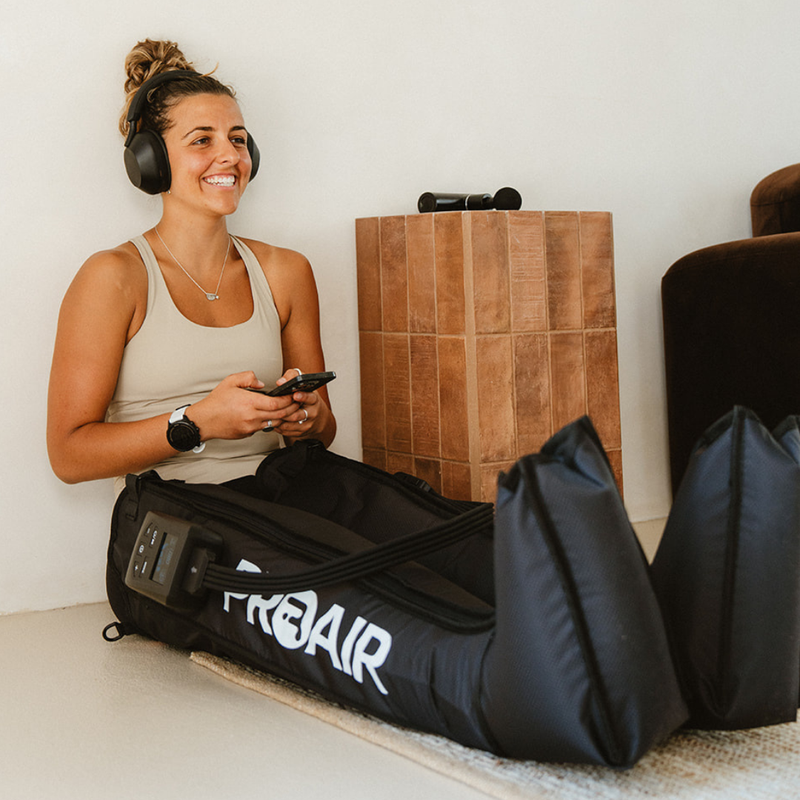
- Air compression suits. Inflatable sleeves for your legs, hips and sometimes arms, run by a control unit. The chambers inflate in sequence, hold, then release. It's the same technology as compression boots, called intermittent pneumatic compression.
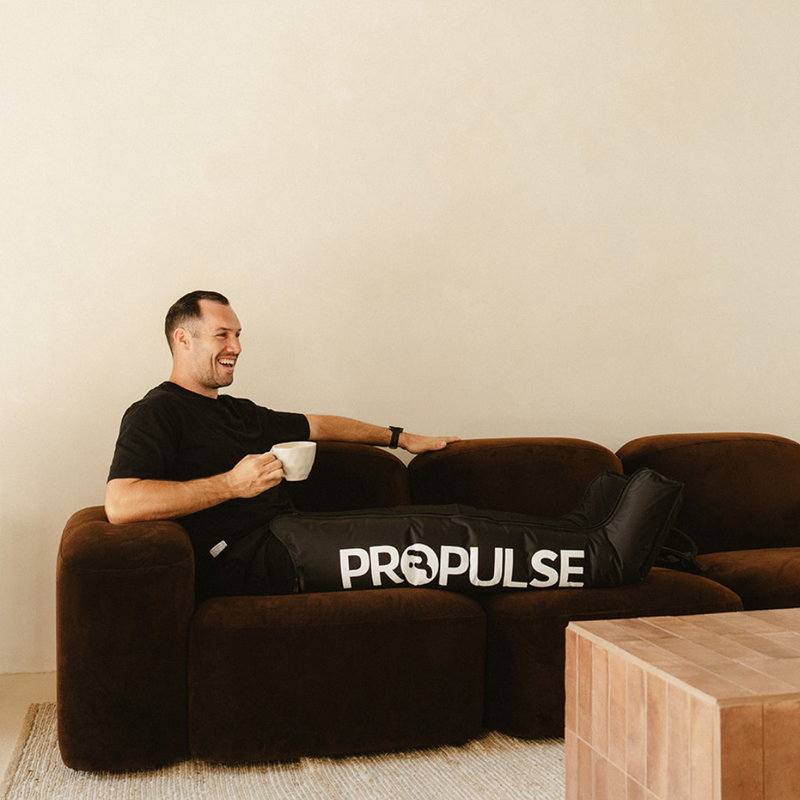
This article is about the second kind. If you've searched for a "compression pants machine" or "recovery pants", that's an air compression suit that covers your hips as well as your legs. Our Lower Body system covers the same areas, one attachment at a time.
What does the research cover?
Almost all of it is on the legs.
- Soreness. A 2024 systematic review looked at 17 studies with 319 participants. It covered lower-limb compression only. It found a trivial to moderate benefit for pain and soreness (Maia et al., 2024).
- Fatigue. After the 161 km Western States Endurance Run, a 20-minute session on the legs lowered muscular fatigue scores straight afterwards, compared with lying down. The effect didn't last into the following days (Hoffman et al., 2016).
My reading: if you want the benefits the research shows, cover your legs first. Hips and glutes are a sensible next step if they get tight. There's little sports research on hip or arm compression on its own, so that part is my practical judgement. More detail in Do Compression Boots Actually Work?
Full suit, legs and hips, or boots only?
| Option | What it covers | Who it suits | Watch out for |
|---|---|---|---|
| Compression boots | Feet to the top of the thigh | Most people. Runners, cyclists and team sport players | Don't reach your hips or glutes |
| Legs and hips (our Lower Body system) | Legs, plus a separate hip attachment for hips, glutes and upper thighs | Tight hips and glutes, heavy leg training, two people sharing | One person does legs and hips one after the other, not both at once |
| Full suit with arms | Legs, hips and arms | People who want their arms done too | Costs more, more to put on, and far less research on the arms |
What happened to our Full Body system?
We used to sell a Full Body system with arm attachments. The Lower Body Compression System replaced it.
What's in the Lower Body Compression System?
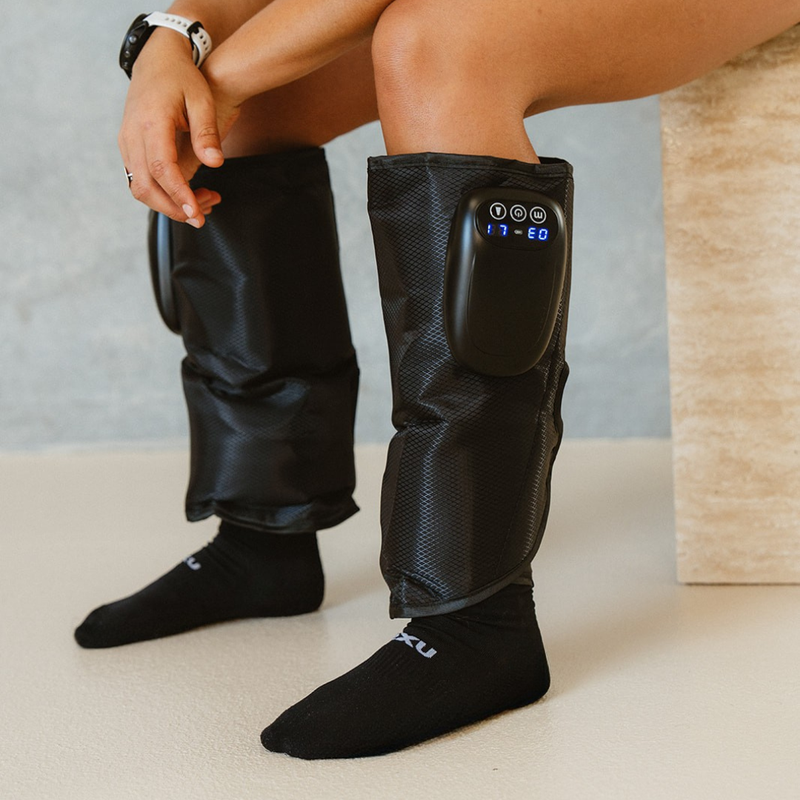
- Two leg attachments, 100 cm long and up to 75 cm around.
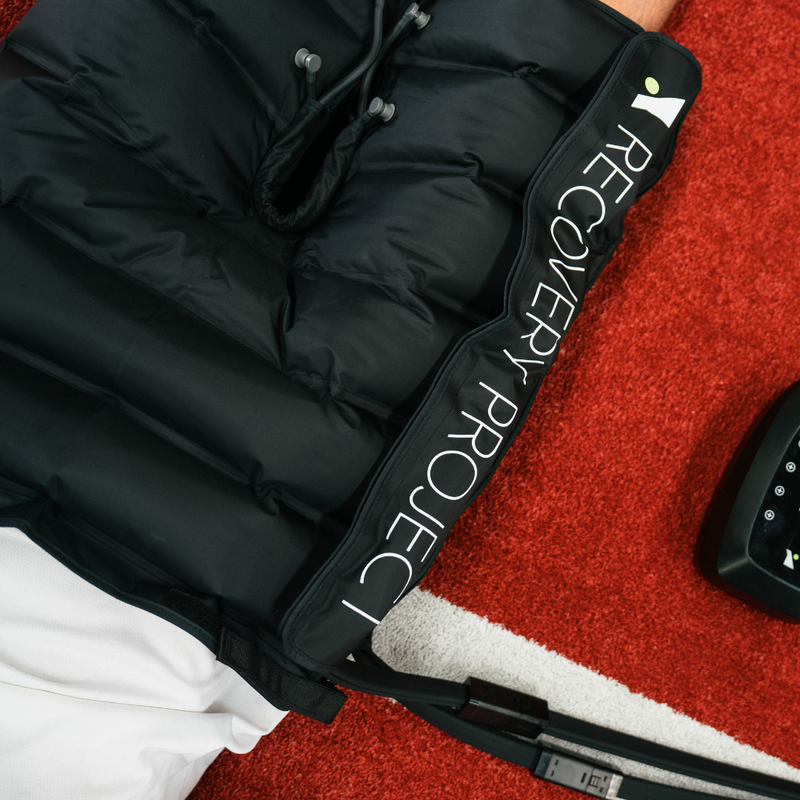
- One hip attachment, 82 cm long, covering your hips, glutes and upper thighs.
- The PROPulse control unit: 30 to 260 mmHg, 6 massage modes, and custom time and zone settings.
- Runs on its battery for 3+ hours per charge, or plugged in.
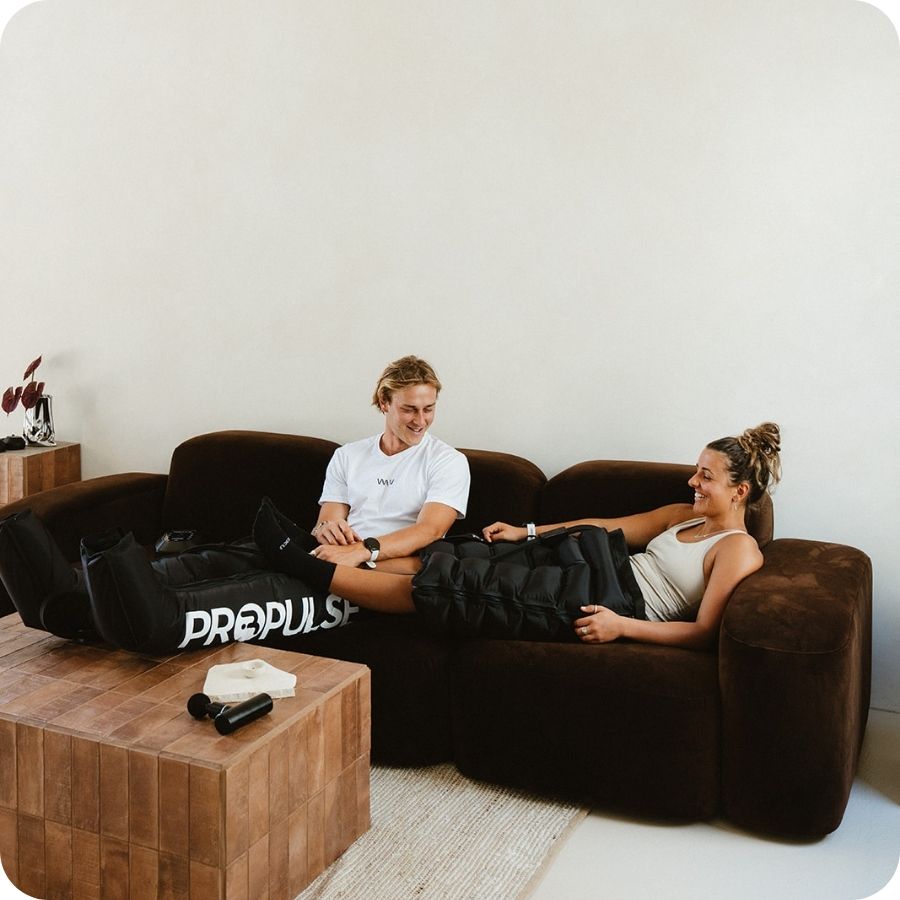
- PROSync, so two people can recover at once: one in the leg attachments, the other in the hip attachment.
- A free PROPack backpack.
One honest limit. A single person uses the legs or the hip attachment, not both at once, because the hip attachment overlaps the top of the leg boots. Do your legs, then swap to the hip attachment. It takes seconds.
Already have PROPulse? Add PROHip, $350
How to use legs and hips in one session
- Legs first: 20 to 30 minutes. That's the most common research protocol (Maia et al., 2024).
- Pressure: start low and build to a firm but comfortable squeeze. Around 80 mmHg is the most common research setting.
- Then hips: swap to the hip attachment if your hips or glutes feel tight. Keep the pressure comfortable.
- Stop if anything tingles, goes numb or hurts.
Looking at a suit for swelling or after surgery?
That's a medical question, not a recovery one. Our systems are built for sports recovery. We're not medical doctors, so speak to your GP or physio first.
Which one is right for you?
Lower Body Compression System, $995
Legs, then hips and glutes. The PROPulse control unit with two leg attachments and a hip attachment.
PROPulse, $645
Legs only, most control. 6 chambers you can switch off one by one, 30 to 260 mmHg in 5 mmHg steps. Add PROHip later for $350.
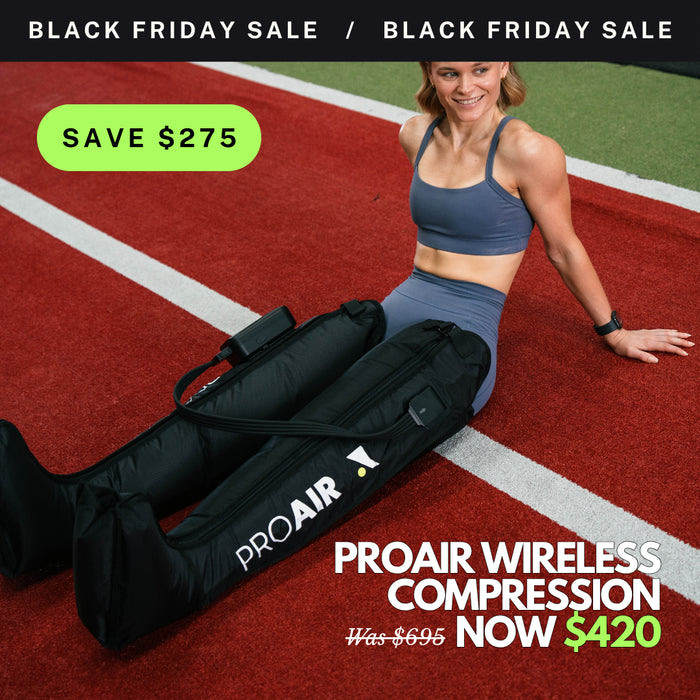
PROAir Wireless, $420
Legs only, no power cord. 30 to 240 mmHg. Our pick if you only need legs.
Every system: Free shipping. 30-day money-back guarantee. 1-year warranty. Afterpay and Zip available. Still deciding? Try the Boot Finder.
Black Friday: code WELCOME25 takes $25 off your order until Sunday 6 December, 11:59pm.
Frequently asked questions
Is a full body compression suit worth it?
For most people, no. The research is almost all on the legs. Start there, and add hips if they're your problem area.
Do compression pants machines work?
They use the same air compression as boots, extended over the hips. The evidence is strongest for the legs (Maia et al., 2024). With our Lower Body system, you do legs and hips one after the other.
Does the Lower Body system include arm attachments?
No. It's two leg attachments and a hip attachment.
Can I wear the leg and hip attachments at the same time?
No. The hip attachment overlaps the top of the leg boots, so one person uses them one at a time. With PROSync, two people can recover at once: one in the legs, one in the hip attachment.
Will it fit me?
The leg attachments are 100 cm long and up to 75 cm around. Free zip extenders add up to 10 cm, so add a note to your order. The hip attachment's padded panels and adjustable straps fit a wide range of waist and hip sizes. Not sure? Message us before you order.
I already have PROPulse. Do I need the whole system?
No. Add the PROHip attachment for $350. It runs off your PROPulse control unit.
What happened to the Full Body Compression system?
The Lower Body Compression System replaced it. Old Full Body links now take you to the Lower Body page.
See also Hip and Glute Compression for Recovery, Which Compression Boots Are Right for You? and Compression Boots: The Complete Australian Guide.
References
- Hoffman MD, Badowski N, Chin J, Stuempfle KJ. A randomized controlled trial of massage and pneumatic compression for ultramarathon recovery. J Orthop Sports Phys Ther. 2016;46(5):320-326. doi:10.2519/jospt.2016.6455
- Maia F, Nakamura FY, Sarmento H, Marcelino R, Ribeiro J. Effects of lower-limb intermittent pneumatic compression on sports recovery: a systematic review and meta-analysis. Biol Sport. 2024;41(4):263-275. doi:10.5114/biolsport.2024.133665
About the author. Dr Peter Fowler holds a PhD in sport science (Charles Sturt University), where he researched sleep and recovery in athletes, and an MSc in exercise physiology (Loughborough University). He is an ESSA Accredited Sports Scientist (Level 2). He has spent more than 15 years in high-performance sport and athlete recovery, including roles at the Australian Institute of Sport, Tottenham Hotspur and Aspetar in Qatar. He co-founded The Recovery Project with Amanda Fowler. Read Dr Fowler's full background.