Do Compression Boots Actually Work? What the Research Says
 Dr Peter Fowler, PhDSport scientist and co-founder

In this guide
Written by Dr Peter Fowler and Amanda Fowler, founders of The Recovery Project. Updated 21 October 2026.
The short answer: yes. The research shows compression boots increase blood flow in your legs while you use them, make your legs feel less fatigued straight after a session, and can reduce muscle soreness. Several studies also found short-term gains in flexibility and range of motion. Every study below is listed with a link so you can check it.
What the research says, at a glance
| Benefit | What the evidence shows | Key studies |
|---|---|---|
| Increases blood flow | Leg blood flow rises during the session, more so at higher pressure. | Maia et al., 2024 (IJSPP); Zuj et al., 2018 |
| Less fatigue | Lower fatigue scores straight after a session, including after a 161 km ultramarathon. | Hoffman et al., 2016; Heapy et al., 2018 |
| Less muscle soreness | A meta-analysis of 17 studies found a benefit for pain and soreness. A 2025 trial found less soreness at 48 and 72 hours. | Maia et al., 2024 (Biol Sport); Gu et al., 2025 |
| Better perceived recovery | Better perceived recovery than a sham treatment in high-level cyclists, and with daily use over five weeks in handball players. | Maia et al., 2026 (IJSPP); Nuell et al., 2025 |
| Flexibility and range of motion | Short-term gains in several studies, linked to lower pain sensitivity. | Sands et al., 2014 and 2015; Yanaoka et al., 2022 |
What do compression boots actually do to your legs?
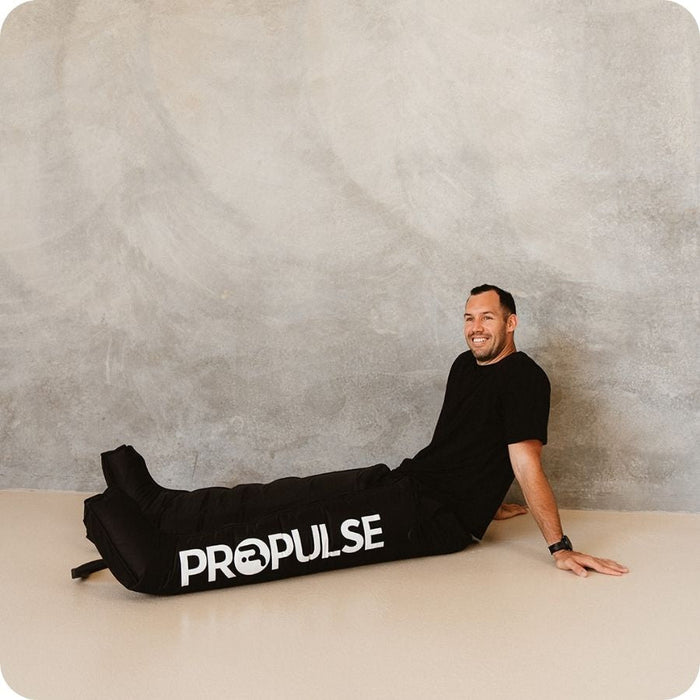
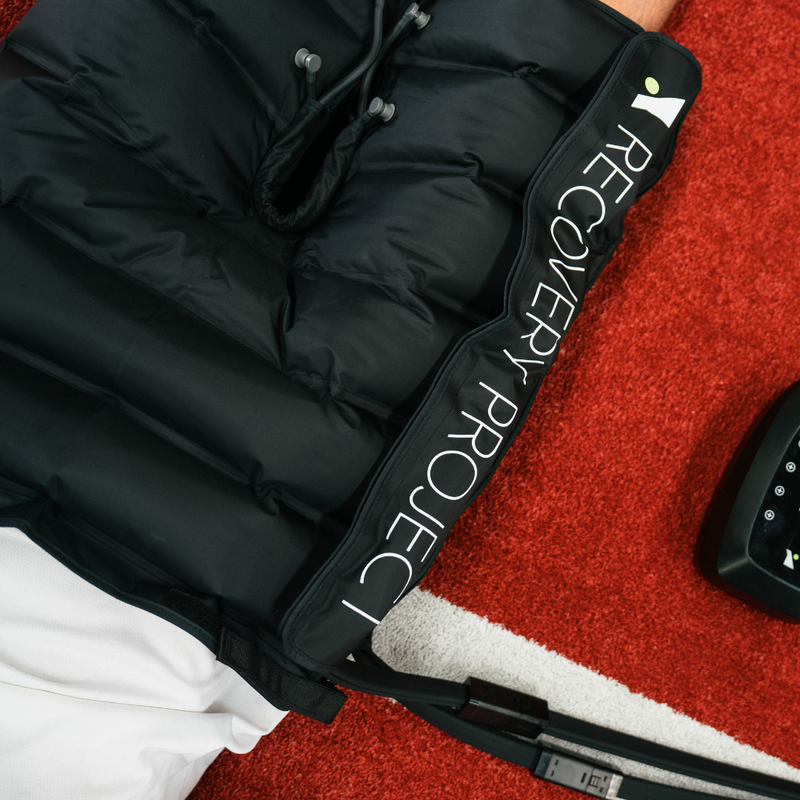
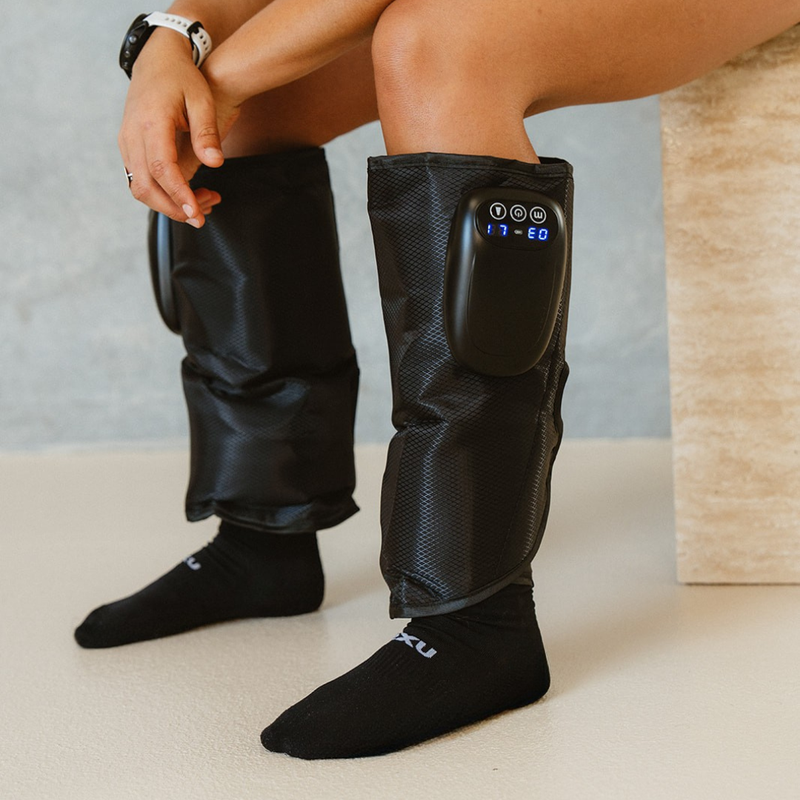
Compression boots use intermittent pneumatic compression. Air chambers inflate in sequence, usually from the foot towards the hip, hold briefly, then release. The idea is to mimic the way your calf muscles pump blood back towards the heart when you walk.
That part is well supported. In a 2024 double-blinded crossover study, 22 soccer and track and field athletes had boots applied at 80 mmHg and at 200 mmHg. Blood flow velocity rose during both sessions, more so at 200 mmHg (Maia et al., 2024, IJSPP). Other studies show the same rise in leg blood flow (Zuj et al., 2018). One study of 20 healthy adults found that an hour at 70 mmHg also improved measures of artery function afterwards (Martin et al., 2015).
Do compression boots reduce muscle soreness?
Yes, in several studies. The best overall summary is a 2024 systematic review and meta-analysis that pooled 17 studies with 319 participants. It found a trivial to moderate effect on pain and soreness. The authors concluded boots may help recovery, mainly by reducing how sore people feel (Maia et al., 2024, Biol Sport).
- A 2025 randomised trial in 20 untrained men found less soreness at 48 and 72 hours when boots were used for 15 minutes after exercise and each day after (Gu et al., 2025).
- Another 2025 trial in 33 active men found a consistent trend towards less soreness with 30 minutes at 200 mmHg (Maia et al., 2025).
Do they make your legs feel less fatigued?
Yes, and this is where the evidence is most consistent. The largest field study I know of randomised runners after the 161 km Western States Endurance Run. A 20-minute boot session lowered overall muscular fatigue scores straight after treatment compared with lying down (Hoffman et al., 2016). A follow-up study with four daily treatments found the same: less fatigue straight after each treatment (Heapy et al., 2018).
A 2026 study in 21 high-level cyclists found better perceived recovery, soreness and fatigue after 30 minutes of high-pressure boots, compared with a sham treatment (Maia et al., 2026, IJSPP). And handball players who used boots daily for five weeks reported better recovery than a control group (Nuell et al., 2025).
Do compression boots improve flexibility?
Several studies say yes, in the short term. In a crossover study, 15 minutes at 70 mmHg improved forward-split range of motion (Sands et al., 2014). In 24 Olympic Training Center athletes, 15 minutes of boots raised the pressure needed to cause pain in the leg muscles, and the effect lasted the rest of the day (Sands et al., 2015). A 2022 study in 14 athletes found 30 minutes of boots improved ankle range of motion, linked to reduced pain sensitivity (Yanaoka et al., 2022). During a block of heavy squat training, boots prevented the drop in flexibility seen with a sham treatment (Haun et al., 2017).
Who gets the most from compression boots?
- People who train hard on back-to-back days and want their legs to feel fresher
- Runners and endurance athletes after long efforts, where the fatigue benefit is best documented
- Anyone who wants a passive recovery option while sitting down anyway: in the evening, after travel or between sessions
- People who like the feeling of a firm massage but can't get to a massage therapist often
Boots work best as part of a routine built on sleep, food and a sensible training load.
How to use compression boots to match the research
- Session length: 20 to 30 minutes is what most studies used (Maia et al., 2024, Biol Sport).
- Pressure: start low and build to a firm but comfortable squeeze. Around 80 mmHg is the most common research setting.
- Timing: after training or a long day on your feet. The feel-good effect is strongest straight after.
- Frequency: daily use for five weeks has been studied in competitive handball players (Nuell et al., 2025). See How Often Should You Use Compression Boots?
Which compression boots should you choose?
- Calves and arms (entry level): PROLite, $275.
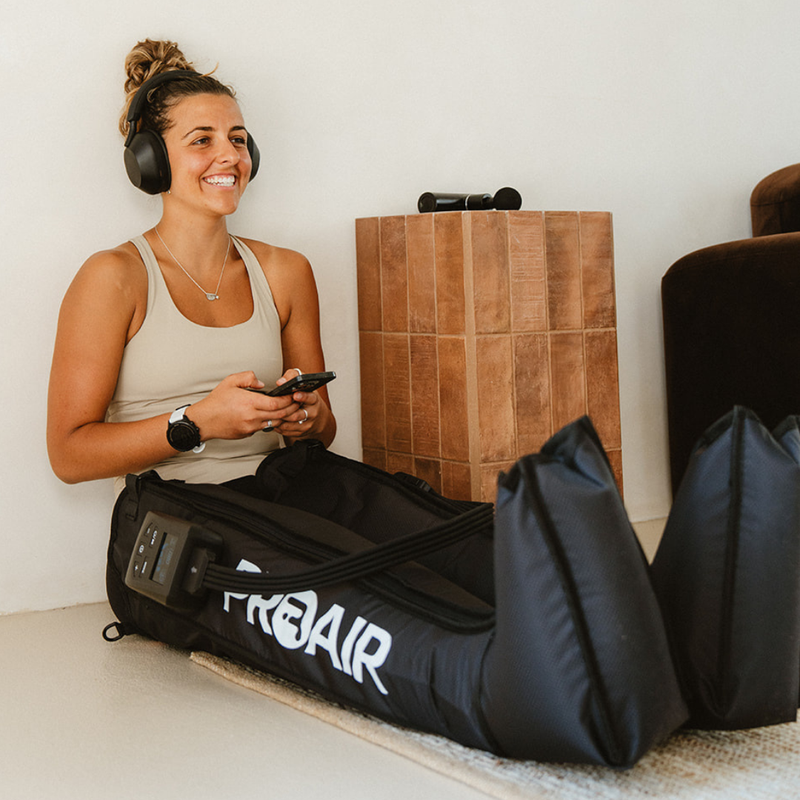
- Wireless full-leg boots (mid level): PROAir Wireless, $420, 30 to 240 mmHg.
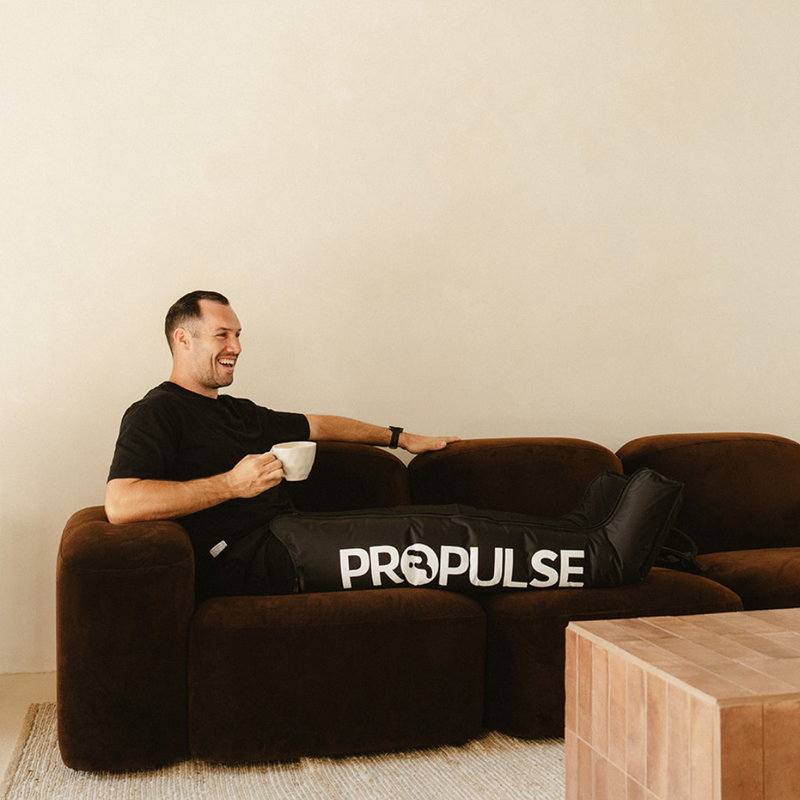
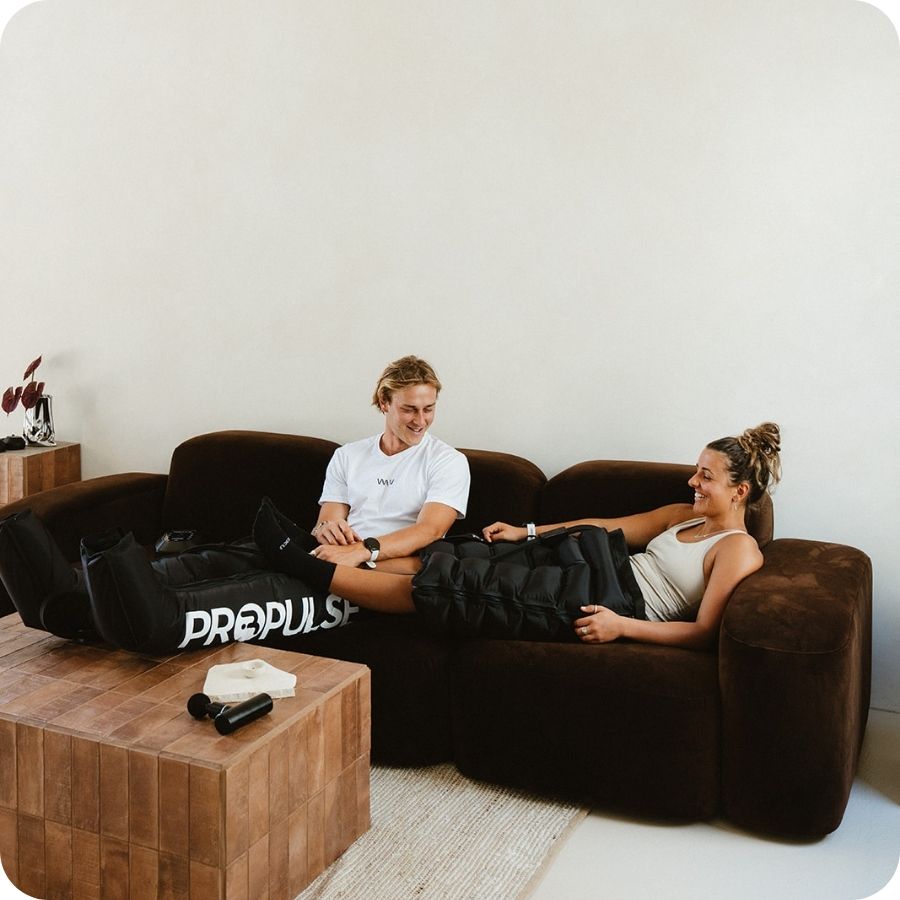
- Full control (pro level): PROPulse, $645, 30 to 260 mmHg in 5 mmHg steps.
- Legs and hips: Lower Body Compression System, $995.
Black Friday prices, current at the time of writing. Every boot comes with a 30-day money-back guarantee. Comparing brands? Read Best Compression Boots Australia 2026 or the Complete Australian Guide to compression boots.
Frequently asked questions
Do compression boots actually work?
Yes. They increase blood flow during use, make legs feel less fatigued straight afterwards, and can reduce soreness and improve short-term flexibility.
Are compression boots a placebo?
Not just a placebo. They measurably increase blood flow during use (Maia et al., 2024, IJSPP), and high-level cyclists reported better recovery after boots than after a sham treatment (Maia et al., 2026, IJSPP).
Do compression boots help with DOMS?
They can. The 2024 meta-analysis found a trivial to moderate effect on soreness, and a 2025 trial found less soreness at 48 and 72 hours (Gu et al., 2025).
Are compression boots better than massage?
In the Western States study, both massage and boots reduced fatigue straight after treatment (Hoffman et al., 2016). Boots have one big advantage: you can use them at home, every day.
Will compression boots make me faster?
They're built for recovery, so expect fresher, less sore legs rather than a faster next session. Most lab studies found later performance was similar to resting (Overmayer & Driller, 2018; Northey et al., 2016).
Do compression boots help with swelling?
Pneumatic compression is an established clinical treatment for some types of swelling (Schwahn-Schreiber et al., 2018). Recovery boots use the same sequential compression for heavy, tired legs. We're not medical doctors, so if you have a medical condition or unexplained swelling, check with your GP or a physio first.
References
- Maia F, Nakamura FY, Sarmento H, Marcelino R, Ribeiro J. Effects of lower-limb intermittent pneumatic compression on sports recovery: a systematic review and meta-analysis. Biol Sport. 2024;41:263-275. doi:10.5114/biolsport.2024.133665
- Maia F, Machado MVB, Silva G, Nakamura FY, Ribeiro J. Hemodynamic effects of intermittent pneumatic compression on athletes: a double-blinded randomized crossover study. Int J Sports Physiol Perform. 2024;19:932-938. doi:10.1123/ijspp.2024-0017
- Zuj KA, Prince CN, Hughson RL, Peterson SD. Enhanced muscle blood flow with intermittent pneumatic compression of the lower leg during plantar flexion exercise and recovery. J Appl Physiol. 2018;124:302-311. doi:10.1152/japplphysiol.00784.2017
- Martin JS, Borges AR, Beck DT. Peripheral conduit and resistance artery function are improved following a single, 1-h bout of peristaltic pulse external pneumatic compression. Eur J Appl Physiol. 2015;115:2019-2029. doi:10.1007/s00421-015-3187-8
- Gu Z, Dai J, Xu K, et al. Effects of intermittent pneumatic compression on delayed onset muscle soreness and recovery of muscular fatigue. PM R. 2025;17:1080-1090. doi:10.1002/pmrj.13377
- Maia F, Nakamura FY, Pimenta R, Tito S, Sousa H, Ribeiro J. Intermittent pneumatic compression may reduce muscle soreness but does not improve neuromuscular function following exercise-induced muscle damage: a randomized placebo-controlled trial. Int J Sports Physiol Perform. 2025;20:1103-1109. doi:10.1123/ijspp.2024-0410
- Hoffman MD, Badowski N, Chin J, Stuempfle KJ. A randomized controlled trial of massage and pneumatic compression for ultramarathon recovery. J Orthop Sports Phys Ther. 2016;46:320-326. doi:10.2519/jospt.2016.6455
- Heapy AM, Hoffman MD, Verhagen HH, et al. A randomized controlled trial of manual therapy and pneumatic compression for recovery from prolonged running: an extended study. Res Sports Med. 2018;26:354-364. doi:10.1080/15438627.2018.1447469
- Maia F, Barreira J, Tito S, Nakamura FY, Ribeiro J. Effects of intermittent sequential pneumatic compression on functional, biochemical, and perceptual recovery markers in trained cyclists: a randomized sham-controlled crossover trial. Int J Sports Physiol Perform. 2026;21:1107-1114. doi:10.1123/ijspp.2025-0397
- Nuell S, Rabassa J, Bárcena C, Espar J, Munné C, García I. Effects of daily use of intermittent pneumatic compression in competitive handball players: a randomized controlled trial. Biol Sport. 2025;42:311-321. doi:10.5114/biolsport.2025.151656
- Sands WA, Murray MB, Murray SR, et al. Peristaltic pulse dynamic compression of the lower extremity enhances flexibility. J Strength Cond Res. 2014;28:1058-1064. doi:10.1519/JSC.0000000000000244
- Sands WA, McNeal JR, Murray SR, Stone MH. Dynamic compression enhances pressure-to-pain threshold in elite athlete recovery: exploratory study. J Strength Cond Res. 2015;29:1263-1272. doi:10.1519/JSC.0000000000000412
- Yanaoka T, Numata U, Nagano K, Kurosaka S, Kawashima H. Effects of different intermittent pneumatic compression stimuli on ankle dorsiflexion range of motion. Front Physiol. 2022;13:1054806. doi:10.3389/fphys.2022.1054806
- Haun CT, Roberts MD, Romero MA, et al. Does external pneumatic compression treatment between bouts of overreaching resistance training sessions exert differential effects on molecular signaling and performance-related variables compared to passive recovery? An exploratory study. PLoS One. 2017;12:e0180429. doi:10.1371/journal.pone.0180429
- Overmayer RG, Driller MW. Pneumatic compression fails to improve performance recovery in trained cyclists. Int J Sports Physiol Perform. 2018;13:490-495. doi:10.1123/ijspp.2017-0207
- Northey JM, Rattray B, Argus CK, Etxebarria N, Driller MW. Vascular occlusion and sequential compression for recovery after resistance exercise. J Strength Cond Res. 2016;30:533-539. doi:10.1519/JSC.0000000000001080
- Schwahn-Schreiber C, Breu FX, Rabe E, et al. S1 guideline on intermittent pneumatic compression (IPC). Hautarzt. 2018;69:662-673. doi:10.1007/s00105-018-4219-1
About the author. Dr Peter Fowler holds a PhD in sport science (Charles Sturt University), where he researched sleep and recovery in athletes, and an MSc in exercise physiology (Loughborough University). He is an ESSA Accredited Sports Scientist (Level 2). He has spent more than 15 years in high-performance sport and athlete recovery, including roles at the Australian Institute of Sport, Tottenham Hotspur and Aspetar in Qatar, where he directed a performance recovery research program. He co-founded The Recovery Project with Amanda Fowler. Read Dr Fowler's full background.